
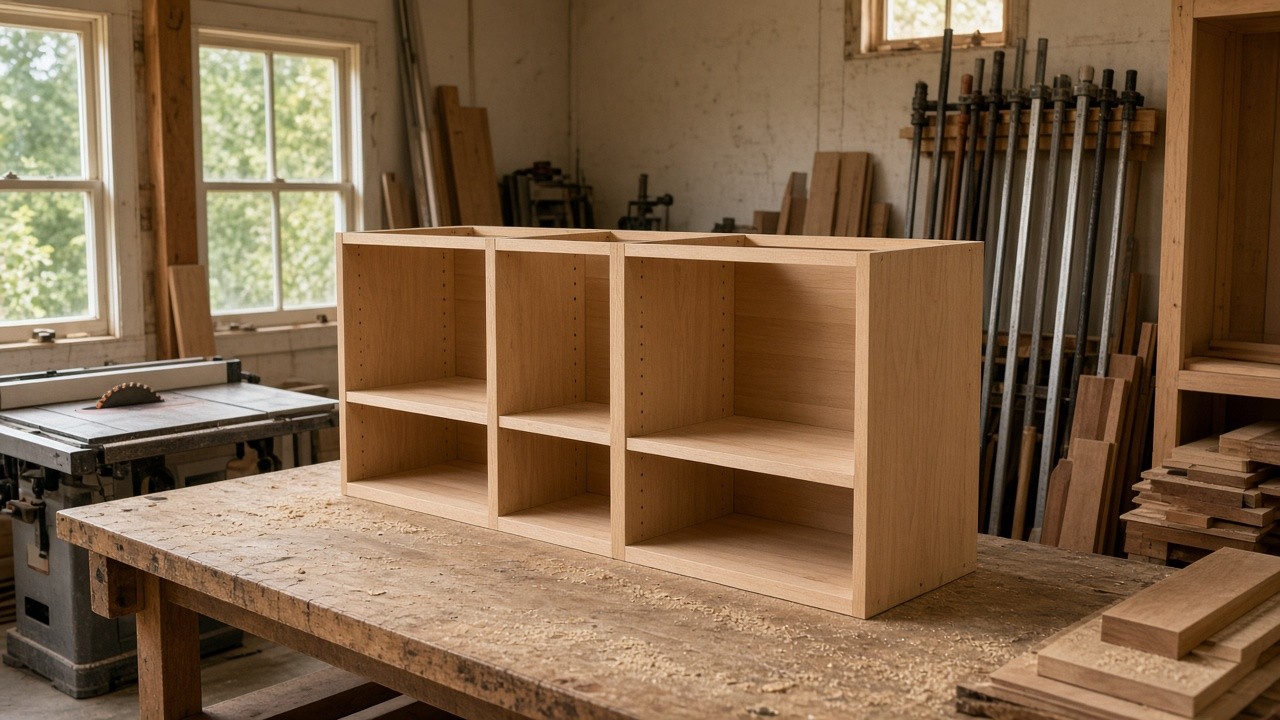
A custom cabinet maker website should answer what a homeowner, builder, or designer asks before they call: what you build and for which rooms, how custom differs from semi-custom and stock, how your cabinets are built, what woods, finishes, and hardware you offer, how the design and drawing process works, how far out your production schedule runs, whether you install or sell supply-only, how you work with contractors and countertop fabricators, which towns you serve, and how to start. Put those facts in plain text on pages you own. That is the marketing. Design is the layout that makes those facts easy to find and easy for search and AI to cite.
A custom cabinet shop sells something a big-box store cannot: cabinets built to fit one room, in a local shop, by people the customer can meet. The website should show that shop and those people, and explain the build in enough detail that a careful buyer can compare.
Who is reading the site
Cabinet traffic comes from a few groups.
Homeowners planning a kitchen remodel or new build who want better quality or a better fit than stock cabinets. They search and ask AI things like custom cabinets Iowa City, cabinet maker Cedar Rapids, or custom kitchen cabinets near Davenport.
Homeowners who want built-ins: bookcases, mudroom lockers, window seats, entertainment walls, bathroom vanities, a home office, or a bar.
Builders, remodelers, and kitchen designers who need a reliable cabinet shop for their clients, with clear drawings and dependable delivery dates.
Owners of older homes who need cabinets that match existing woodwork or fit odd spaces.
Businesses such as offices, clinics, churches, and restaurants that need commercial casework, if you build it.
Iowa shops around Iowa City, Cedar Rapids, and the Quad Cities compete the same way cabinet makers across the Midwest do: show the shop, explain the build, and hit the schedule.
What the homepage has to say in the first screen
In plain HTML text:
1. Shop name, location, and the towns you serve 2. Core work: kitchen cabinets, bathroom vanities, built-ins, furniture pieces, commercial casework — only what you build 3. Phone that reaches the owner or someone who can talk about a project 4. One clear button: Start a cabinet project 5. Current lead time for new projects, whether you install, and licensed and insured if you can keep it honest
Show the shop and how the cabinets are built
This is where a custom shop earns its price. Put the build on the website in plain words and photos.
Write a construction page that covers:
- Boxes. What material you use for cabinet boxes and backs, how thick, and how boxes are joined
- Face frame or frameless. Which you build, or both, and how each looks and works
- Doors and drawer fronts. Solid wood, panel styles, how doors are made
- Drawers. Drawer box material and joinery, slides you use described by type, soft-close options
- Hinges and hardware. Types you use, adjustability
- Finish. Paint, stain, clear coat, and how the finish is applied and cured in your shop
- Shop photos. Machines, assembly benches, finishing room, people at work
Keep it to what you actually do. A buyer comparing your quote to a big-box quote needs this page to understand the difference. So does an AI assistant asked what makes custom cabinets different.
Explain custom, semi-custom, and stock plainly
Many homeowners do not know the difference, and they compare quotes that are not alike. Explain the terms:
- Stock — set sizes, limited finishes, fast delivery
- Semi-custom — more sizes and options within a catalog line
- Custom — built to the room, any size, wide choice of wood, finish, and details
Say where you fit and where you might suggest another option. If a customer’s budget or schedule fits semi-custom better, say whether you offer it or refer them. Honest advice here earns referrals.
Design, production slots, and lead times
Design. Say how you design: site measure, sketches, computer drawings, finish samples, and how many revisions are included. Say whether you work from a designer’s or architect’s plans.
Production slots. Custom shops build on a schedule. Say how your production calendar works: when a project gets a slot (often after drawings are approved and a deposit is paid, described as your practice), how far out you are booking, and how changes after approval affect the schedule.
Lead times. Say how long a typical kitchen takes from approved drawings to delivery, stated as a typical range with no promise. Update a dated lead-time note on the homepage.
A clear production page helps builders plan the rest of the job and helps homeowners understand why the schedule matters.
Supply-only, installed, and working with other trades
Installed or supply-only. Say whether you install your cabinets, sell them for the contractor to install, or both. Say what installation includes: leveling, scribing to walls, fillers, crown, and hardware.
Working with other trades. Say how you coordinate with contractors, electricians, plumbers, and countertop fabricators. Say when cabinets need to be installed before countertop templating, and whether you recommend fabricators you work with often.
Older homes. If you match existing woodwork or build for out-of-square walls and odd spaces, give it a page with photos.
Service pages that match real jobs
- Kitchen cabinets — design, construction, finishes
- Bathroom vanities — sizes, finishes, furniture-style pieces
- Built-ins — bookcases, mudrooms, window seats, entertainment walls
- Home offices and bars — only what you build
- Matching and older homes — woodwork matching, odd spaces
- Refacing and new doors — only if you offer it
- Commercial casework — offices, clinics, churches
- For builders and designers — drawings, schedules, supply-only
- Service areas — towns with real projects
Proof that belongs on a URL you own
- Project pages with town, room, wood species, finish, and photos from finished rooms
- Shop photos of boxes, doors, and drawers being built and finished
- Close-ups of joinery, drawer boxes, and inside the cabinets
- Reviews on a page you own, with town and project type when allowed, plus a link to Google Business
- Insurance facts
- Warranty terms in plain text for construction, finish, and hardware
A photo of the inside of a drawer box tells a careful buyer more than a wide shot of a finished kitchen. Show both.
The project path is the conversion
A good project form asks for:
- Name, phone, email
- Address or town
- Homeowner, builder, remodeler, or designer
- Room or rooms: kitchen, bath, built-ins, other
- New build, remodel, or cabinets only
- Plans, drawings, or photos of the space
- Wood and finish ideas, if they have them
- Installed or supply-only
- Timeline and the date the space will be ready
Put the form on its own URL so Google Business posts, builders, and AI answers can link to it. Keep click-to-call in the header.
Content that feeds search and AI without theater
- How our cabinets are built, from box to finish
- Custom, semi-custom, or stock: which fits your project
- How our production schedule works, and why slots fill
- Painted or stained cabinets: what we see hold up
- Built-ins for older Iowa homes: matching woodwork
- Short project notes: town, room, wood, finish, what the owner wanted
Your website stays the source of record for customers and for AI assistants like ChatGPT, Gemini, and Grok. Google Business, Facebook, and builder referrals can point back to it. Keep your true construction details, lead times, and service area on a page you own.
Bots now make a large share of web requests. People still buy custom cabinets, and they still compare shops carefully before they commit. Search is changing, and machines more and more decide which cabinet makers a homeowner or builder hears about first. Plain-text construction, process, lead times, and real projects on a domain you own keep you in that short list.
Design rules that fit the trade
- Fast on mobile and desktop. Cabinet buyers study photos on both.
- Click-to-call in the header
- High-contrast text and large, sharp photos with captions
- Navigation: Kitchens, Built-ins, How we build, Our process, Projects, Builders, Reviews, Start a project
- No fake reviews or badges
- You own the domain, hosting, and content
What Upley does for shops like this
Upley builds and hosts websites for Iowa and Midwest service businesses. For a custom cabinet maker that means a construction page with shop photos, clear custom and semi-custom explanations, a production and lead-time page, project pages by room, a project form that takes plans and photos, hosting that stays up for daily crawls, and an easy way to post work from the shop without turning your crew into marketers.
Same Iowa web team that ran Big Ten Web Design — design, hosting, SEO — plus the modern layer so search and AI can find the true file about your work, process, and towns.
If your current site is a slideshow of kitchens and a phone number, start with the homepage five facts, a how-we-build page, and five project pages. Then build from the project form.
Book 30 minutes: /half-hour-meeting/ Call 319-535-2508 · aaron@upley.com Iowa City, Cedar Rapids, Quad Cities / Davenport