
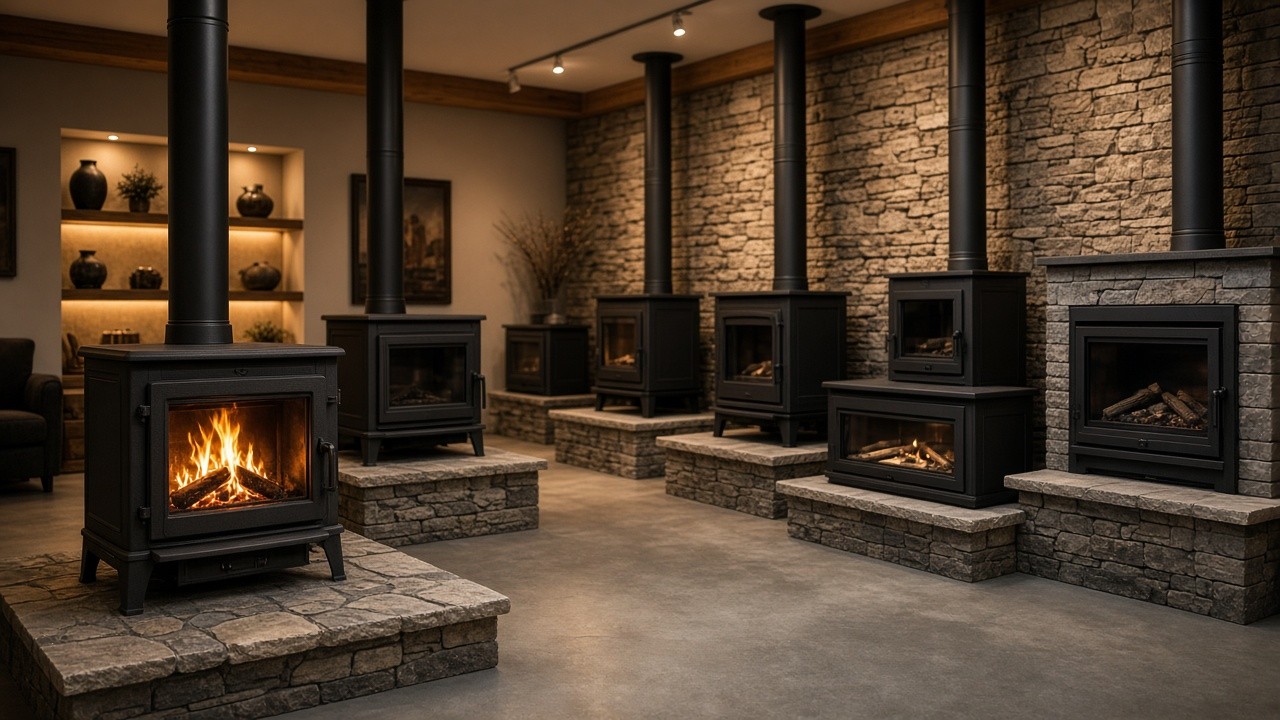
A fireplace and stove shop website should answer what a homeowner asks before they visit the showroom: whether gas, wood, or pellet fits their home and habits, which units they can see burning in person, whether an insert can go in their old fireplace, what venting their house needs, how the install process works, who handles the gas line and permits, how long from order to install, what annual service includes, whether you sell pellets or other supplies, your showroom hours, and how to book a site visit. Put those facts in plain text on pages you own. That is the marketing. Design is the layout that makes those facts easy to find and easy for search and AI to cite.
Hearth products are sold in person. People want to feel the heat, see the flame, and hear the fan. The website’s job is to help them narrow the choice and walk into the showroom ready to buy.
Who is reading the site
Hearth shop traffic comes from a few groups.
Homeowners with an old, drafty masonry fireplace who want an insert that actually heats the room. They search and ask AI things like fireplace insert Iowa City, gas insert Cedar Rapids, or wood stove store near Davenport.
Rural families who heat with wood or pellets and need a new stove, or want to switch fuels. They care about heat output, fuel supply, and how long a load burns.
Homeowners building or remodeling who want a new fireplace in a living room, basement, or outdoor space.
Owners who need service: a gas fireplace that will not light, a pellet stove that jams, glass that needs cleaning, or an annual check before winter.
Iowa shops around Iowa City, Cedar Rapids, and the Quad Cities compete the same way hearth retailers across the Midwest do: show the units burning, explain fuel choices honestly, and handle the install well.
What the homepage has to say in the first screen
In plain HTML text:
1. Shop name, showroom address, and the towns you install in 2. Core products and services: gas fireplaces and inserts, wood stoves and inserts, pellet stoves, outdoor fireplaces, installation, service — only what you offer 3. Phone that reaches the showroom 4. Two clear buttons: Visit the showroom / Schedule a site visit 5. Showroom hours, current install lead time, and licensed and insured if you can keep it honest
Compare gas, wood, and pellet honestly
This is the page buyers need most. Write it without a sales pitch.
For each fuel, cover:
- How it heats and how it feels. Flame look, heat output described in general terms, fan or no fan, how fast it warms a room
- Fuel supply. Natural gas or propane access, where to get firewood and how much storage it needs, where to buy pellets and how they are stored
- Daily work. Loading, ash removal, cleaning, how often pellets need to be added
- Power outages. Which units work without electricity and which do not
- Venting. What each type usually needs: direct vent, chimney liner, or pellet vent
- Upkeep. Annual service needs for each
Say who each fuel tends to fit: the family that wants push-button heat, the rural family with a wood lot, the homeowner who wants steady heat without hauling logs. Keep it balanced. AI assistants asked “gas vs wood vs pellet stove in Iowa” get a clear, local, honest answer.
Publish the showroom
The showroom is your best sales tool, so describe it on the site.
- Which units you keep burning on display, and which fuel types
- Showroom hours, including evenings or Saturdays if you have them
- Whether customers can book a time with a salesperson
- What to bring: photos of the fireplace or room, measurements, a photo of the chimney outside
- Photos of the showroom so people know what to expect
A page that lists “burning on display” units is one many hearth shops skip. It is also what gets people in the car.
Explain inserts, venting, and the install
Inserts. Many buyers have an old masonry or factory-built fireplace. Explain how an insert works, what you check first (the firebox, the chimney, the damper), and why a liner is usually part of the job.
Venting. Explain the types in plain words and say that the unit’s listing and local codes decide what is allowed. Mention that you check clearances to combustibles on every job.
The install process. Write down the steps: site visit and measurements, quote, order, delivery, install day, first burn, and walk-through. Say how long each usually takes.
Gas lines and permits. Say who runs the gas line, whether a licensed plumber or gas fitter does it, and who pulls permits. Codes and permit rules differ by town and county, so tell homeowners to expect a permit where required and let you or the installer handle it.
Supply-only. Say whether you sell units without installation, and what that means for warranty coverage.
Service and supplies
Say what annual service includes for gas, wood, and pellet units, whether you service brands you did not sell, and when to book to avoid the fall rush. If you sell pellets, firewood accessories, glass cleaner, or parts, say so and list pickup hours. Pellet customers often come back every few weeks, and a clear supply page keeps them coming to you.
Service pages that match real jobs
- Gas fireplaces and inserts — natural gas and propane, remote and thermostat options
- Wood stoves and inserts — heat output, burn times, clearances
- Pellet stoves and inserts — hopper size, fuel, power needs
- Outdoor fireplaces and fire features — only what you sell
- Fireplace inserts for old fireplaces — site check, liner, install
- Installation — steps, permits, gas lines, lead times
- Annual service — gas, wood, pellet
- Pellets and supplies — stock, pickup hours
- Service areas — towns you install in
Proof that belongs on a URL you own
- Photos of real installs with town, fuel type, and room in the caption
- Before and after photos of old fireplaces with new inserts
- Showroom photos
- Reviews on a page you own, with town and product when allowed, plus a link to Google Business
- Installer certifications only if your team holds them, with the program named
- Dealer authorizations only for lines you actually carry
- Warranty terms in plain text for units and installation
The site visit path is the conversion
A good site visit form asks for:
- Name, phone, email
- Address or town
- Gas, wood, pellet, or not sure
- New fireplace, insert in an existing fireplace, freestanding stove, or outdoor
- Photos of the fireplace or room and the chimney outside
- Natural gas, propane, or neither at the house
- Timeline: this season or later
Put the form on its own URL so Google Business posts and AI answers can link to it. Keep click-to-call in the header, and the showroom address and hours on every page.
Content that feeds search and AI without theater
- Gas, wood, or pellet: an honest comparison for Iowa homes
- What happens on install day for a fireplace insert
- Which stoves keep heating during a power outage
- How to get your old fireplace ready for an insert
- When to book annual service before the fall rush
- Short install notes: town, fuel, room, what the homeowner wanted
Your website stays the source of record for customers and for AI assistants like ChatGPT, Gemini, and Grok. Google Business, Facebook, and Nextdoor can point back to it. Keep your true showroom hours, fuel facts, and install steps on a page you own.
Bots now make a large share of web requests. People still buy fireplaces and stoves in person, and they still research fuel types and shops before they visit. Search is changing, and machines more and more decide which shops a homeowner hears about first. Plain-text fuel comparisons, showroom details, install steps, and real installs on a domain you own keep you in that short list.
Design rules that fit the trade
- Fast on mobile
- Click-to-call in the header, with showroom address and hours on every page
- High-contrast text and real photos with captions
- Navigation: Gas, Wood, Pellet, Inserts, Showroom, Installation, Service, Reviews, Visit us
- No fake reviews or dealer logos you do not carry
- You own the domain, hosting, and content
What Upley does for shops like this
Upley builds and hosts websites for Iowa and Midwest service businesses. For a fireplace and stove shop that means an honest fuel comparison, a showroom page, clear install and permit steps, a site visit form that takes photos from a phone, hosting that stays up for daily crawls, and an easy way to post installs without turning your staff into marketers.
Same Iowa web team that ran Big Ten Web Design — design, hosting, SEO — plus the modern layer so search and AI can find the true file about your products, services, and hours.
If your current site is a brand catalog and a phone number, start with the homepage five facts, a gas-wood-pellet page, and a showroom page. Then build from the site visit form.
Book 30 minutes: /half-hour-meeting/ Call 319-535-2508 · aaron@upley.com Iowa City, Cedar Rapids, Quad Cities / Davenport