
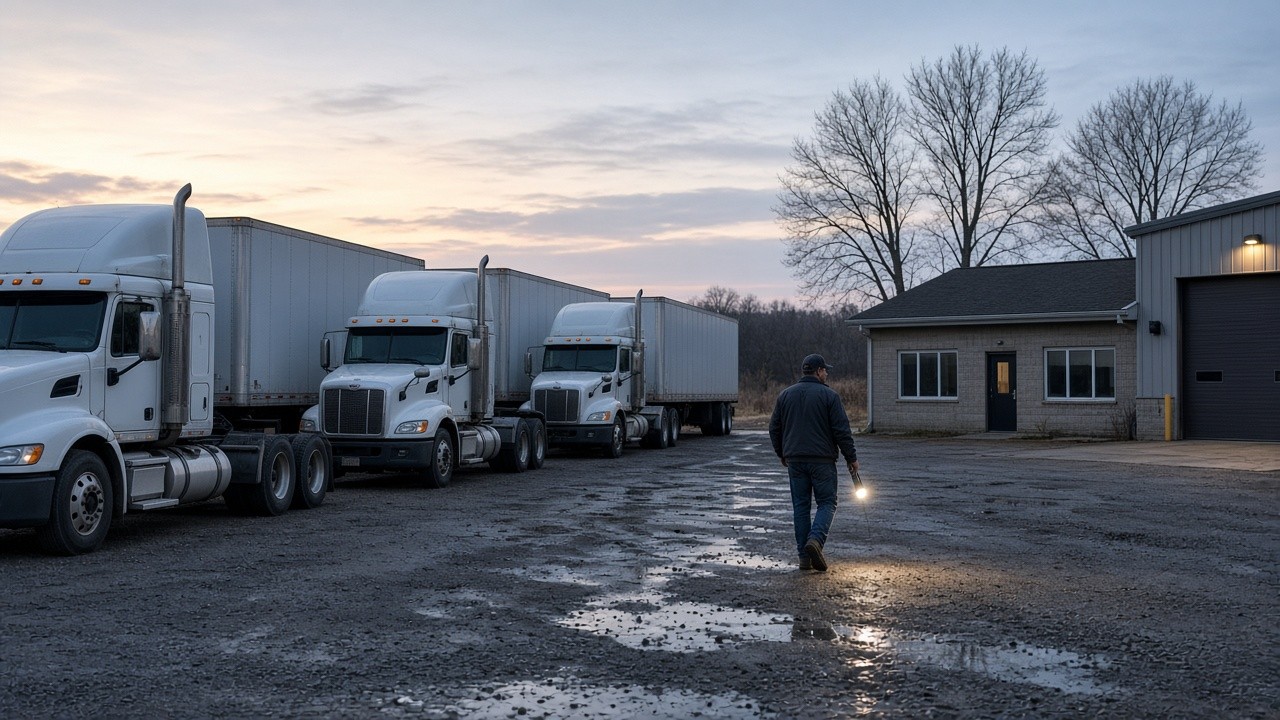
A trucking company website has two jobs. For drivers, it should answer what kind of freight you haul, which lanes you run, how much home time they get, how pay works, what equipment they drive, what you require to hire, and how to apply. For shippers and brokers, it should answer which lanes and regions you cover, what equipment you run, your USDOT and MC numbers, your insurance, and how to get a quote or book a load. Put those facts in plain text on pages you own. That is the marketing. Design is the layout that sends each group to the right answer fast, and makes both sets of facts easy for search and AI to cite.
Most trucking sites try to do both jobs on one page and do neither well. Split the site into two front doors: Drive for us, and Ship with us.
Who is reading the site
Trucking traffic comes from a few groups.
Drivers looking for a new seat. Experienced CDL-A drivers who want more home time, better equipment, or a smaller company. Local drivers who want to be home every night. New CDL holders looking for a first job. They search and ask AI things like CDL driver jobs Cedar Rapids, home daily trucking jobs Iowa City, regional flatbed jobs Iowa, or small trucking company hiring Davenport.
Families of drivers. A spouse often reads the home time and benefits page as closely as the driver does.
Shippers looking for a carrier. Manufacturers, ag co-ops, grain elevators, and distributors who want a dependable carrier for regular lanes. They want lanes, equipment, capacity, and credentials.
Freight brokers vetting a carrier. They want your authority, insurance, and safety record, fast.
Iowa carriers based around Cedar Rapids, Iowa City, the Quad Cities, and rural towns across the state compete the way trucking companies do everywhere: clear jobs for drivers, clear capability for shippers.
What the homepage has to say in the first screen
In plain HTML text:
1. Company name, home terminal town, and any other terminals 2. Freight and equipment: dry van, reefer, flatbed, hopper, tanker, only what you run 3. Two clear buttons: Drive for us / Ship with us 4. USDOT number and MC number, if you hold operating authority 5. Phone for recruiting and phone for dispatch or sales, listed separately
The driver side: publish the job
Drivers compare carriers on a few facts. Put them in plain text.
- Types of jobs: local, regional, OTR, dedicated, owner-operator, only what you offer
- Home time for each job type, stated honestly
- Lanes and regions each job runs
- Pay structure: by mile, by load, by hour, or salary, and what counts toward pay, like detention, stops, and layovers. Post numbers only if they are real and current, and date them.
- Benefits: health insurance, retirement, paid time off, only what is true
- Equipment: tractor makes and model years, trailer types, whether trucks are assigned
- Hiring requirements: CDL class, experience, endorsements, record rules, drug testing
- What orientation looks like and how long it takes to get rolling
Drivers talk to each other, and they notice when a job ad does not match the job. Honest pages attract drivers who stay.
Rural Iowa carriers have an edge here worth writing down. Many drivers want to stay close to home, run ag freight they grew up around, and work for a company where the owner knows their name. If that describes your company, say it plainly, with the towns your drivers live in and the kind of freight they haul in each season.
The shipper side: publish capability and credentials
- Lanes and regions you run regularly
- Equipment types and rough fleet size, if you share it
- Freight you specialize in: grain, ag inputs, building materials, food grade, machinery
- Service types: truckload, dedicated, drop trailer, local shuttle
- USDOT and MC numbers, with a note that shippers can check them in the federal carrier lookup
- Insurance coverage in plain words, with how to request a certificate
- Safety program basics
- How to request a quote and who handles it
A clear capability page answers the questions a shipper or broker asks in the first call. It also gives AI assistants accurate facts when someone asks which carriers haul hopper freight out of Eastern Iowa.
Service pages that match how people search
Driver side:
- Local driving jobs
- Regional driving jobs
- OTR driving jobs, only if you run them
- Owner-operators: lease terms, settlements, fuel program, only if you lease on
- Benefits and pay
- Apply
Shipper side:
- Truckload and dedicated service
- Equipment types: one page each if you run several
- Ag and grain hauling: harvest capacity, elevators served, only if real work for you
- Lanes and service area
- Safety and credentials
- Request a quote
Proof that belongs on a URL you own
- Photos of your actual trucks, trailers, terminal, and shop
- A page naming dispatchers and recruiters, so drivers know who they will talk to
- Driver stories, with their permission and their own words
- Reviews on a page you own, plus a link to Google Business
- Credentials: USDOT, MC, insurance, and any safety programs you participate in, named accurately
A photo of your truck at an elevator near Williamsburg teaches a driver and a shipper more than a stock photo of a truck on an empty desert highway.
The application and quote paths are the conversion
Driver application:
- A short first step: name, phone, email, CDL class, years of experience, job type wanted
- A link to the full application, including any required employment application
- How fast a recruiter calls back
Shipper quote:
- Company, contact, phone, email
- Origin and destination
- Freight type, weight, and equipment needed
- One-time or recurring
- Pickup date
Put each on its own URL so job boards, Google Business posts, and AI answers can link to the right one. Keep separate click-to-call numbers for recruiting and dispatch.
Content that feeds search and AI without theater
Useful posts for a trucking company read like terminal notes:
- What home time looks like on each of our routes
- How our driver pay works, with a sample settlement, dated and accurate
- What orientation week looks like
- Harvest hauling season: how we schedule it
- How to check our USDOT and MC numbers before you book
- New trucks in the fleet, with photos
Keep pay and benefits posts dated and current. A pay post from two years ago costs trust with drivers.
Why the website matters more now
Websites and SEO are changing. They still matter, and for carriers they matter more now. Bots now make a large share of web requests. Drivers still pick a carrier, and shippers still vet one before they book. More and more, ChatGPT, Gemini, Grok, and Google’s AI answers decide which companies a driver or shipper hears about first. Those tools look for clear facts: lanes, equipment, home time, credentials.
Your website should be the source of record. Job boards, load boards, Google Business, and Facebook can point back to it. Keep the true job details, lanes, and credentials on a domain you own.
Design rules that fit a carrier
- Fast on mobile. Drivers read job pages on phones at truck stops.
- Two front doors: Drive for us / Ship with us
- Separate click-to-call for recruiting and dispatch
- Navigation: Drive for us, Pay and benefits, Ship with us, Equipment, Safety, About, Contact
- No fake reviews or pay numbers that do not match the job
- You own the domain, hosting, and content
What Upley does for carriers like this
Upley builds and hosts websites for Iowa and Midwest businesses. For a trucking company that means separate driver and shipper paths, honest job pages, a capability and credentials page, application and quote forms that work from a phone, hosting that stays up for daily crawls, and an easy way to post fleet photos and updates.
Same Iowa web team that ran Big Ten Web Design, handling design, hosting, and SEO, plus the modern layer so search and AI can find the true file about your company, jobs, and lanes.
If your current site is a truck photo and a phone number, start with the homepage five facts and two front doors. Then build the driver job pages and the shipper capability page.
Book 30 minutes: /half-hour-meeting/ Call 319-535-2508 · aaron@upley.com Iowa City, Cedar Rapids, Quad Cities / Davenport