
A veterinary clinic website should answer what a pet owner or livestock producer asks before they call: which animals you see, whether you take new clients, whether you make farm calls and how far, what happens after hours, who the vets are, what a first visit involves, and when you are open. Put those facts in plain text on pages you own. That is the marketing. Design is the layout that makes those facts easy to find on a phone and easy for search and AI to cite.
Iowa has two kinds of vet searches. A family in Coralville wants a small animal clinic near home. A cattle producer outside Tipton wants to know who will come out to the barn at 2 a.m. in calving season. Many rural clinics serve both. The website should make it obvious which kind of practice you are.
Who is reading the site
Veterinary traffic comes from a few groups.
Pet owners looking for a new clinic. They moved, got a new puppy, or lost access to their old vet. They want to know if you take new clients and how soon. They search and ask AI things like vet accepting new patients Iowa City, cat clinic Cedar Rapids, or veterinarian near me open Saturday.
Pet owners with an urgent problem. A dog that ate something, a cat that stopped eating, an injury. They want to know if you can see them today, and where to go if you are closed.
Livestock producers and horse owners. They want to know which species you work with, your farm call area, herd health programs, and how to reach a vet after hours.
Current clients checking hours, refilling medications, or paying a bill.
Iowa clinics serving Iowa City, Cedar Rapids, the Quad Cities, and the small towns around them compete the way vets do everywhere: be clear about who you serve, be honest about after-hours care, and show the real people.
What the homepage has to say in the first screen
In plain HTML text:
1. Clinic name, town, and street address 2. Species you see: dogs and cats, exotics, horses, cattle, swine, small ruminants, only what is true 3. Whether you are accepting new clients, stated plainly 4. Phone that reaches the front desk, and one clear button: Call / Request an appointment 5. Hours, and a line on what to do after hours
Say who you serve, and how far you drive
This is the biggest gap on rural vet sites.
- Species you see in the clinic, and species you see on farm calls
- Your farm call area, by towns, counties, or a rough radius
- Farm call fees or how mileage works, if you are comfortable posting it
- Herd health, preg checks, processing, and other ag services you offer
- Whether you work with swine or poultry operations, and in what way
A town clinic that only sees small animals should say that plainly too. It saves a producer a wasted call and it helps search and AI match you to the right people.
Be honest about after hours
Every owner wonders what happens when the pet gets sick at night. Say it on the site.
- Whether your own vets take after-hours calls, and for which clients
- Which emergency or specialty hospitals you refer to, by name and town, if you have a regular referral
- What after-hours visits cost compared to regular visits, if you can say
- For livestock clients, how to reach the on-call vet during calving or lambing season
Rural clinics often share after-hours coverage with a neighboring practice, or rotate call among the vets. If that is how you work, say so, and say how clients reach whoever is on call that night. A clear after-hours page takes stress off families and off your front desk. It also gives AI assistants the right answer when someone asks where to take a sick dog at night near Cedar Rapids.
Service pages that match real visits
- Wellness and vaccines: puppy and kitten visits, annual exams, what vaccines you discuss
- Sick and urgent visits: same-day rules
- Surgery and dental: spays, neuters, dental cleanings, what to expect before and after
- Large animal and herd health: species, services, farm calls
- Equine: only if real work for you
- End-of-life care: at the clinic or at home, written gently and plainly
- Boarding or grooming: only if you offer them
- Online pharmacy or refills: how refills work
Each page should describe what the visit involves and how to book. Keep claims about outcomes off the page. Veterinary practice is regulated by state boards, so check your board’s rules on advertising and on how you describe credentials and services.
Proof that belongs on a URL you own
- A team page with each vet’s name, degree, school, and the species they focus on
- Photos of your actual clinic, exam rooms, trucks, and staff
- Reviews on a page you own, with a link to Google Business
- Facts about equipment and services you actually have: in-house lab, digital X-ray, ultrasound
- Accessibility and parking facts, including trailer parking if you see horses or livestock at the clinic
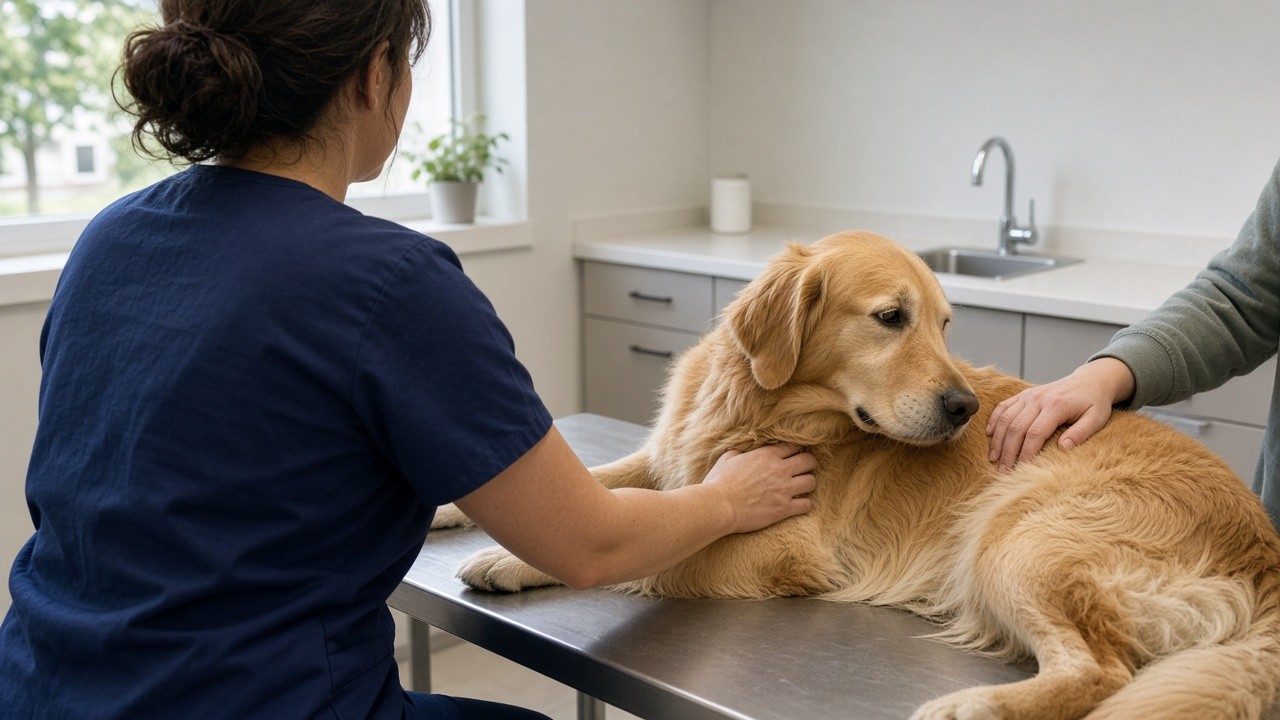
A photo of your vet truck in a feedlot near Kalona teaches a producer and an AI assistant more than a stock photo of a golden retriever.
The appointment path is the conversion
For urgent problems, the phone call is the conversion. Click-to-call belongs in the header.
For routine visits, a short request form helps:
- Name, phone, email
- New or current client
- Animal type, name, age
- Reason for visit
- Preferred days and times
- For farm calls: location, number of head, type of work
Say how fast you call back. Put the form on its own URL so Google Business posts and AI answers can link to it.
Content that feeds search and AI without theater
Useful posts for a vet clinic read like clinic notes:
- What to expect at your puppy’s first visit
- Where to go after hours, and when to call first
- Calving season: how to reach our on-call vet
- What we look at during a dental cleaning
- Heat, cold, and pets: plain seasonal reminders for Eastern Iowa
- Short notes from the week, with owner permission for any pet photos
Keep it plain and kind. Avoid medical advice that should come from an exam. Point people to call.
Why the website matters more now
Websites and SEO are changing. They still matter, and they matter more now for clinics. Bots now make a large share of web requests. People still choose a vet, and they still call when an animal is sick. More and more, ChatGPT, Gemini, Grok, and Google’s AI answers decide which clinics an owner hears about first. Those tools look for clear facts: species, hours, after-hours rules, new-client status.
Your website should be the source of record. Google Business, Facebook, and review sites can point back to it. Keep the true species list, farm call area, and after-hours plan on a domain you own.
Design rules that fit a clinic
- Fast on mobile. Many calls start on a phone, in a truck or at the kitchen table.
- Click-to-call in the header, with after-hours instructions nearby
- High-contrast text and plain navigation
- Navigation: New clients, Services, Large animal, After hours, Our team, Pharmacy, Contact
- No fake reviews, invented awards, or promises about outcomes
- You own the domain, hosting, and content
What Upley does for clinics like this
Upley builds and hosts websites for Iowa and Midwest businesses. For a vet clinic that means clear pages on species and farm calls, an honest after-hours page, a team page with real people, hosting that stays up for daily crawls, and an easy way to post clinic updates and photos without turning your staff into marketers.
Same Iowa web team that ran Big Ten Web Design, handling design, hosting, and SEO, plus the modern layer so search and AI can find the true file about your clinic, species, and hours.
If your current site has a stock puppy photo and a phone number, start with the homepage five facts, a species and farm call page, and an after-hours page. Then build from the appointment form.
Book 30 minutes: /half-hour-meeting/ Call 319-535-2508 · aaron@upley.com Iowa City, Cedar Rapids, Quad Cities / Davenport