
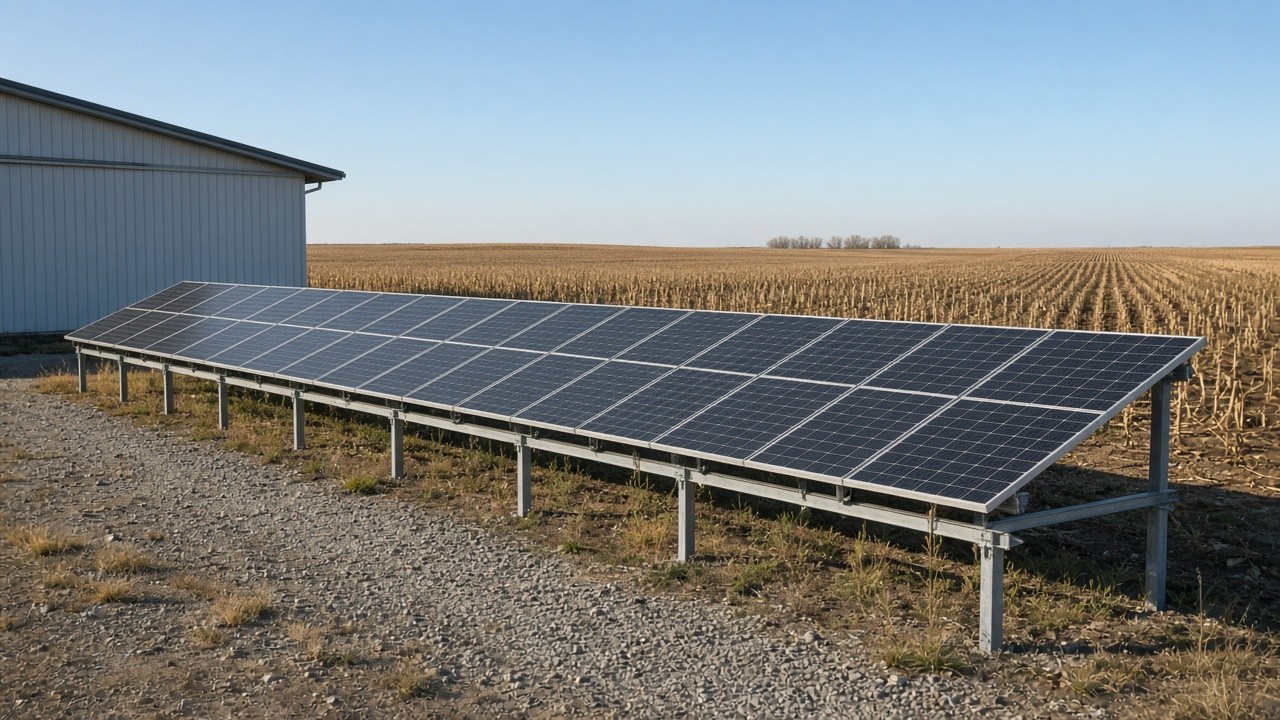
A solar installer website should answer what a homeowner, farmer, or business owner asks during the months they spend researching: whether solar makes sense for their building, what incentives are available right now, how their utility handles solar, what goes into a payback estimate, whether they can pay cash, finance, or lease, whether their roof is ready, what warranties cover the panels, inverters, and your work, what happens after install, which areas you serve, and how to get a site assessment. Put those facts in plain text on pages you own. That is the marketing. Design is the layout that makes those facts easy to read and easy for search and AI to cite.
Solar buyers read a lot. They have seen door-to-door pitches, online ads with big promises, and conflicting numbers from friends. The installer whose website is calm, current, and honest about the details is the one they trust with a site visit.
Who is reading the site
Solar traffic comes from a few groups, and many are early in their research.
Homeowners curious about lowering their electric bill. They want to know if their roof works, what their utility does with extra power, and what solar costs to own. They search and ask AI things like solar installer Iowa City, is solar worth it in Iowa, or solar panels Cedar Rapids MidAmerican.
Farmers and rural landowners looking at ground-mount systems for shops, grain bins, livestock buildings, or homes. They ask about grants, rural electric cooperatives, and how solar fits with the rest of the operation.
Small businesses, churches, and schools looking at rooftop or ground systems, often with a board to convince.
Homeowners who already have solar and need service, monitoring help, or a new inverter, sometimes because their original installer is gone.
Iowa installers around Iowa City, Cedar Rapids, and the Quad Cities compete the same way solar companies across the Midwest do: explain the details honestly, keep the information current, and make the site assessment easy to book.
What the homepage has to say in the first screen
In plain HTML text:
1. Company name and the areas you serve 2. Core work: residential rooftop, ground-mount, farm and ag solar, commercial, battery storage, service on existing systems — only what you do 3. Phone that reaches someone who can answer questions 4. One clear button: Book a site assessment 5. Whether you are a local installer with your own crews or use subcontractors, and licensed and insured if you can keep it honest
Keep a dated incentives page
Federal, state, and utility incentives for solar have changed in recent years and will keep changing. Buyers know this and are wary of anyone quoting old numbers.
Keep one page that lists the incentives you know apply to your customers right now:
- Federal programs, with a plain description and a link to the official source
- State programs, if any apply
- Utility rebates or programs from the utilities in your area
- Grant programs for farms and rural businesses, such as USDA Rural Energy for America Program (REAP), with a link to the USDA page
- What you do and do not help with on the paperwork
Put the date at the top and update it every time something changes. Tell people to confirm with a tax professional. A dated, sourced page like this is exactly what careful buyers and AI assistants look for when someone asks “what solar incentives are available in Iowa right now.”
Write a page for each utility you connect to
In Iowa, how solar works on your bill depends on your utility. Investor-owned utilities like MidAmerican Energy and Alliant Energy, municipal utilities, and rural electric cooperatives each have their own rules for interconnection, metering, and credit for extra power.
Give each utility you work with a page:
- The interconnection steps and who handles the application
- How extra power is credited, in plain words, with a link to the utility’s own tariff or solar page
- Typical wait for utility approval, described as a process
- Any size limits or special equipment the utility requires
A homeowner served by a rural co-op near Solon has a different situation than one on MidAmerican in Bettendorf. Separate pages answer each one honestly, and they are pages many installers skip.
Show what goes into a payback estimate
Buyers want a number. Honest installers know the number depends on a lot of things. Explain the inputs so people understand your estimate when they get it:
- Their past electric use, from twelve months of bills
- Roof or ground orientation, tilt, and shading
- System size and equipment
- Their utility’s rules for credit on extra power
- Incentives that apply to them
- Financing costs, if they finance
- Expected equipment life and any replacement, like an inverter
Do not publish a payback promise on the site. Say that you build each estimate from the customer’s own bills and site, and show one sample estimate layout with the numbers removed or clearly labeled as an example.
Financing, roofs, and warranties
Ownership and financing. Say whether customers can pay cash, use a loan through a lender you work with, or lease or sign a power purchase agreement if those are available in your area. Explain who owns the system in each case and what happens if they sell the house.
Roofs. Say how you check roof age and condition before a rooftop install, whether you recommend replacing an older roof first, and how mounting affects the roof warranty. If you work with a roofer, say so.
Warranties. Separate them clearly: panel manufacturer warranty, inverter warranty, and your workmanship warranty. Say what each covers and for how long, and who to call.
Service pages that match real jobs
- Residential rooftop solar — process, roof check, equipment you install
- Ground-mount solar — acreage and farm sites
- Farm and ag solar — shops, bins, livestock buildings, REAP grants
- Commercial solar — businesses, churches, schools
- Battery storage — only if you install it
- Service and monitoring — your systems and systems from other installers, if you take them
- Incentives — dated, sourced
- Utility pages — one per utility
- Service areas — counties and towns with real installs
Proof that belongs on a URL you own
- Project pages with town or county, system size, mount type, and photos
- Monitoring screenshots from real systems, with customer permission and no personal details
- Reviews on a page you own, with town and system type when allowed, plus a link to Google Business
- NABCEP or other certifications only if your installers hold them, with names
- License and insurance facts
- Warranty terms in plain text
The site assessment path is the conversion
A good assessment form asks for:
- Name, phone, email
- Address and county
- Home, farm, or business
- Utility company
- Rooftop, ground, or not sure
- Upload of recent electric bills
- Roof age, if known
- Timeline: researching, this year, ready now
Put the form on its own URL so Google Business posts and AI answers can link to it. Keep click-to-call in the header.
Content that feeds search and AI without theater
- Solar incentives in Iowa as of this month, with sources
- How solar works on a rural electric co-op in eastern Iowa
- What goes into our payback estimates
- Should you replace your roof before going solar?
- Short project notes: county, system size, mount type, what the owner wanted
- What happens to your solar system if you sell your house
Your website stays the source of record for customers and for AI assistants like ChatGPT, Gemini, and Grok. Google Business and Facebook can point back to it. Keep your true incentives, utility details, and warranties on a page you own.
Bots now make a large share of web requests. People still buy solar, and they read a lot before they commit. Search is changing, and machines more and more decide which installers a homeowner or farmer hears about first. Plain-text, dated, sourced information on a domain you own keeps you in that short list.
Design rules that fit the trade
- Fast on mobile and desktop. Solar buyers read on both.
- Click-to-call in the header
- High-contrast text and real photos with captions
- Navigation: Residential, Farm, Commercial, Incentives, Utilities, Warranties, Projects, Book an assessment
- No payback promises, fake reviews, or certifications you do not hold
- You own the domain, hosting, and content
What Upley does for shops like this
Upley builds and hosts websites for Iowa and Midwest service businesses. For a solar installer that means dated incentive and utility pages, clear financing and warranty facts, project pages with real systems, an assessment path that takes bills from a phone, hosting that stays up for daily crawls, and an easy way to post installs without turning your crew into marketers.
Same Iowa web team that ran Big Ten Web Design — design, hosting, SEO — plus the modern layer so search and AI can find the true file about your services, areas, and terms.
If your current site has a sunset over panels and a savings calculator, start with the homepage five facts, a dated incentives page, and one utility page. Then build from the assessment form.
Book 30 minutes: /half-hour-meeting/ Call 319-535-2508 · aaron@upley.com Iowa City, Cedar Rapids, Quad Cities / Davenport