
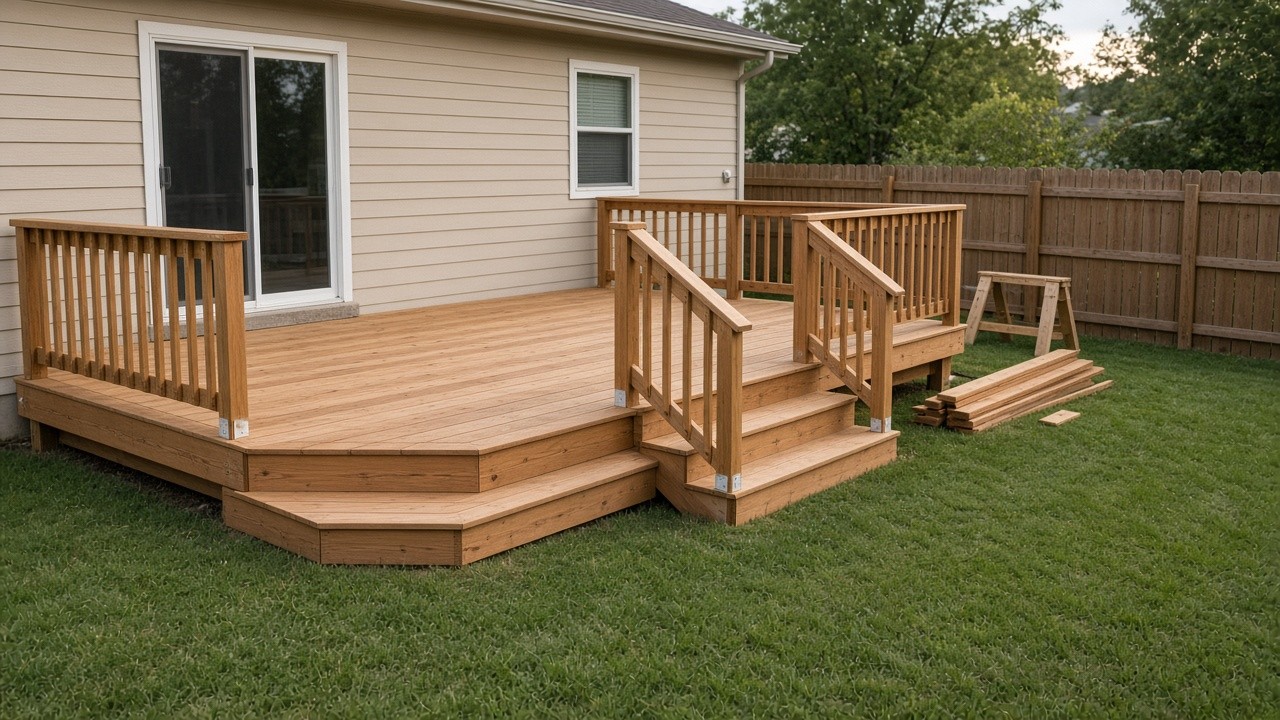
A deck or fence contractor website should answer what a homeowner asks before they call: what you build and in which materials, which towns you work in, who finds the property line, who calls for utility locates, whether you pull the city permit, how HOA approval works, how deep the posts and footings go, how far out you are booked, and how to get a quote. Put those facts in plain text on pages you own. That is the marketing. Design is the layout that makes those facts easy to find on a phone and easy for search and AI to cite.
Decks and fences start with paperwork most homeowners have never done. Where exactly is my line? Does my HOA need to see plans? Does the city need a permit for a deck this size? The builder who answers those questions on the website gets the call from the homeowner who is stuck.
Who is reading the site
Deck and fence buyers come from a few groups.
Homeowners who just got a dog, a pool, a new neighbor, or a new baby and want a fence soon. They are thinking about height, style, gates, and whether the fence can go right on the line. They search and ask AI things like privacy fence installer Coralville, dog fence North Liberty, or how close to the property line can I build a fence in Cedar Rapids.
Homeowners replacing a rotting deck or adding a new one off the back door. They are comparing wood and composite, asking about stairs and railings, and wondering about permits and inspections.
Families in newer subdivisions with HOA rules on fence style, height, color, and material. They need a builder who knows the approval routine.
Rural owners who need farm fence, board fence, or long runs around acreage. They want to know if you travel and whether you do that kind of work at all.
Iowa builders around Iowa City, Cedar Rapids, and the Quad Cities compete the same way deck and fence builders across the Midwest do: show real builds in real towns, explain the paperwork plainly, and make the quote easy to request.
What the homepage has to say in the first screen
In plain HTML text:
1. Company name and the towns you serve 2. Core work: wood fence, vinyl fence, chain link, aluminum, farm fence, wood decks, composite decks, railings, repairs — only what you build 3. Phone that reaches someone who books quotes 4. One clear button: Get a quote 5. Current booking note, and licensed and insured if you can keep it honest
A homeowner who needs a fence before the puppy arrives wants a number, a quote button, and an idea of your schedule on the first screen.
Publish the before-we-dig checklist
Many deck and fence sites skip this page, and it may be the most useful one you can write.
Explain, in order, what has to happen before a post hole gets dug:
- Property line. Say who is responsible for knowing where the line is. Say whether you ask for a survey or survey pins, whether you will locate existing pins, and whether you recommend a surveyor when pins are missing. Say how far off the line you usually set a fence and why.
- Utility locates. In Iowa, anyone digging calls 811 (Iowa One Call) first. Say whether you place the call, how long you wait for marks, and what happens with private lines like invisible dog fence, sprinkler lines, or a buried line to a shed that the utilities do not mark.
- HOA approval. Say whether you provide drawings and product sheets for the HOA packet, and whether you wait for written approval before scheduling.
- City or county permits. Say whether you pull the permit, which of your towns usually require one for decks or fences, and who schedules inspections. Point people to their city for the final rule; codes differ by town.
- Neighbors. Say how you handle a shared fence line and which side the good side faces, if you have a standard.
Written plainly, this page saves you phone time, cuts down on jobs that stall, and gives AI assistants a clear local answer when someone asks what to do before building a fence in Iowa.
Explain what holds it up
Homeowners see the boards and the rails. They do not see the posts and footings, and that is where a cheap job fails.
Give a short page, with photos, on how you set posts and footings for your area. Say how deep you dig for frost, whether you use concrete, gravel, or both, how you handle ledger boards against the house on a deck, what hardware you use, and what inspectors look at. Keep it to what you actually do. Photos of open holes, footings, and ledger flashing tell people you care about the parts that end up hidden.
Service pages that match real jobs
- Wood privacy and picket fence — species you use, heights, gates, stain or seal options
- Vinyl and aluminum fence — styles, colors, pool-code gates if you build them
- Chain link and dog fence — heights, coatings, dig guards
- Farm and acreage fence — board, woven wire, or other types only if you build them
- Wood decks — pressure-treated and cedar, stairs, railings, permits
- Composite and PVC decks — product lines you install, warranty basics, heat and color notes
- Deck and fence repair — posts, boards, gates that sag, railings that wobble
- Service areas — towns with real builds and photos
Pool fences deserve a clear note if you build them. Many cities have rules for pool barriers and gates. Say that you build to local code and name the towns you work in.
Proof that belongs on a URL you own
- Photos of finished builds with town, material, height, and style in the caption
- Close-ups of gates, hinges, post caps, stair stringers, and railing connections
- In-progress photos: footings, ledger, post holes, string lines
- Reviews on a page you own, with town and project type when allowed, plus a link to Google Business
- License and insurance facts
- Warranty terms in plain text: your workmanship, and the manufacturer’s coverage on composite, vinyl, or hardware
A gallery with the town and product named under each photo lets a homeowner in Marion find a cedar fence you built two streets over.
The quote path is the conversion
A good quote form asks for:
- Name, phone, email
- Address or town
- Fence or deck, new or repair
- Rough length of fence or size of deck, and a photo or sketch
- Material and height they have in mind
- HOA: yes, no, or not sure
- Do they know where the property pins are
- Timeline: this month, this season, next spring
Some builders can give a rough range from a satellite view and a few photos. If you do, say so, and say when a site visit is still needed. Put the form on its own URL so Google Business posts and AI answers can link straight to it.
Content that feeds search and AI without theater
- What to do before building a fence in Iowa City: pins, locates, permits
- How we handle HOA approval, step by step
- Wood vs composite decking: what we see after a few Iowa winters
- How deep we set fence posts, and why
- Short job notes: town, material, height, what the owner needed
- When to stain a new wood fence, and how often after that
Your website stays the source of record for customers and for AI assistants like ChatGPT, Gemini, and Grok. Google Business, Facebook, and Nextdoor can point back to it. Keep your true towns, materials, and process on a page you own.
Bots now make a large share of web requests. People still build decks and fences, and they still compare builders before they call. Search is changing, and machines more and more decide which builders a homeowner hears about first. Plain-text materials, towns, paperwork steps, and real builds on a domain you own keep you in that short list.
Design rules that fit the trade
- Fast on mobile. People look you up standing in the backyard.
- Click-to-call in the header
- High-contrast text and real photos with captions
- Navigation: Fences, Decks, Before we dig, Gallery, Service areas, Reviews, Get a quote
- No fake reviews or manufacturer badges you do not hold
- You own the domain, hosting, and content
What Upley does for shops like this
Upley builds and hosts websites for Iowa and Midwest service businesses. For a deck or fence builder that means clear pages for each material and job type, a before-we-dig page that answers the paperwork questions, a quote path that works from a phone, hosting that stays up for daily crawls, and a simple way to post finished builds from the truck without turning your crew into marketers.
Same Iowa web team that ran Big Ten Web Design — design, hosting, SEO — plus the modern layer so search and AI can find the true file about your work, towns, and process.
If your current site is a phone number and a few unlabeled photos, start with the homepage five facts, the before-we-dig checklist, and ten captioned builds. Then build from the quote form.
Book 30 minutes: /half-hour-meeting/ Call 319-535-2508 · aaron@upley.com Iowa City, Cedar Rapids, Quad Cities / Davenport