
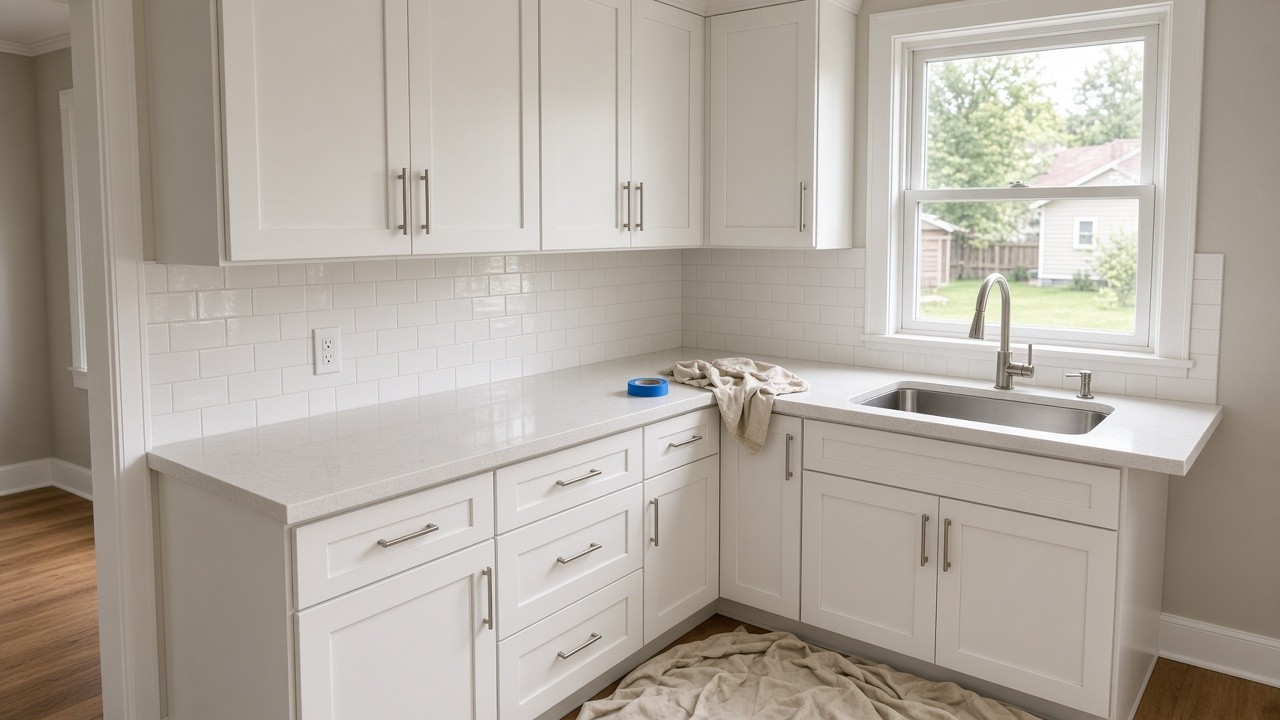
A kitchen and bath remodeler website should answer what a homeowner asks during the months they spend thinking before they call: what kinds of projects you take, how your design process works, what a project like theirs tends to involve in scope and budget, how long each phase takes, who pulls permits and handles the trades, what it is like to live in the house during the work, which towns you serve, what the warranty covers, and how to start. Put those facts in plain text on pages you own. That is the marketing. Design is the layout that makes those facts easy to read and easy for search and AI to cite.
A kitchen or bath remodel is one of the largest purchases most families make on their home. People research for a long time and talk to several companies. The website is where they decide who gets the first meeting.
Who is reading the site
Homeowners planning a kitchen remodel, from new counters and cabinets to a full layout change with walls moved. They save photos for months. They want to know whether you do projects their size and roughly what it could cost. They search and ask AI things like kitchen remodeler Iowa City, bathroom remodel Cedar Rapids, how much does a kitchen remodel cost in Iowa, or kitchen designer Bettendorf.
Homeowners updating a bathroom: a tub-to-shower conversion, an aging-in-place project, a full primary bath, or a hall bath refresh.
Homeowners with a problem that forced the project: water damage, a failed shower, or a sale coming up. They need a clear scope and schedule.
Iowa remodelers serving Iowa City, Cedar Rapids, and the Quad Cities compete like remodelers all over the Midwest: show finished projects in detail, explain the process honestly, and make the first conversation easy to start.
What the homepage has to say in the first screen
In plain HTML text:
1. Company name and towns you serve 2. Core work: kitchens, bathrooms, and any related work you take, like basements or additions — only what you do 3. Showroom or design center address and hours if you have one 4. One clear button: Start a consultation 5. Phone, and licensed and insured if you can keep it honest
Publish the process, phase by phase
The process page is the heart of a remodeling site. Homeowners are nervous about the unknowns. Lay out each phase in plain words:
- First conversation: phone or in-person, what you will ask, whether there is a cost
- Design: measuring, drawings, selections, showroom visits, how many revisions are included
- Design agreement or retainer, if you use one, and how it applies to the build
- Final pricing and contract
- Ordering: cabinets, counters, and fixtures, and typical lead times with a date
- Permits: who pulls them, and which inspections usually apply in the towns you serve
- Construction: demolition, rough-in, inspections, drywall, cabinets, counters, finish work
- Punch list and final walk-through
- Warranty and follow-up
Give a rough time range for each phase if you can stand behind it. A homeowner who can picture the whole path is far more likely to call.
Talk about budget honestly
Budget is the question people most want answered and most remodelers dodge. You do not have to publish a price list, but you can help:
- Describe project levels in plain terms, like refresh, mid-range, and full layout change, and what each usually includes
- If you are comfortable with it, give budget ranges from your own recent projects and date them
- Explain what drives cost up or down: moving plumbing, cabinet type, counter material, structural changes
- Say whether you offer financing or work with local lenders, and where the terms live
Honest budget guidance filters out poor fits and builds trust with good ones. It also gives AI assistants something real and local to say when someone asks what a kitchen remodel costs in your area.
Living through a remodel
Most remodeling websites skip this, and homeowners think about it a lot. Write a page that covers:
- Whether you set up a temporary kitchen, and how
- Dust control and floor protection
- Daily start and stop times, and cleanup
- How you communicate during the project: one project lead, weekly updates, a shared schedule
- What to do with pets and kids
- What happens when a hidden problem shows up behind a wall
Build full project case pages
A grid of pretty kitchen photos is a start. A full project page does much more. For each finished project, publish:
- Town and house style or age
- What the homeowner wanted and what was wrong with the old space
- Before, during, and after photos
- Layout changes, if any
- Cabinet, counter, tile, and fixture selections by name
- Timeline from design to finish
- A review from that homeowner, if they gave permission
These case pages are what people send to their spouse. They are also exactly the kind of specific, original content search engines and AI assistants use when choosing which remodeler to mention.
Service pages that match real jobs
- Kitchen remodeling — refresh through full layout change
- Bathroom remodeling — primary, hall, and powder rooms
- Tub-to-shower conversions
- Accessible and aging-in-place bathrooms — only if you have real experience and training to point to
- Cabinet and countertop replacement — if you do it as a standalone job
- Design services — what is included and whether it is available on its own
- Service areas — towns with real projects
Proof that belongs on a URL you own
- Full project case pages with photos and captions
- Reviews on a page you own, with town and project type when allowed
- License, insurance, and any lead-safe certification if you work on older homes
- Trade partners and product lines you actually use
- Warranty terms in plain text, including what the manufacturer covers and what you cover
The consultation path is the conversion
A good consultation request form asks for:
- Name, phone, email
- Address or town
- Kitchen, bathroom, or both
- Refresh, mid-range, or full remodel, if they know
- House age
- Photos of the current space
- Rough budget range, as an optional field
- Timeline: this year, next year, just starting to plan
- How they prefer to be contacted
Put it on its own URL. Keep click-to-call on mobile. Say how soon you usually respond and what the first conversation will cover.
Content that feeds search and AI without theater
- Our remodeling process, phase by phase
- What drives the cost of a kitchen remodel in Iowa, from our own projects
- How long a bathroom remodel takes, from design to finish
- Living in your house during a kitchen remodel
- Project case pages: town, scope, selections, timeline
- Tub-to-shower conversions: what is involved
Your website stays the source of record. Houzz, Google Business, Facebook, and Instagram can point back. Your real process, budget guidance, and finished projects should live on pages you own.
Bots now make a large share of web requests. People still remodel kitchens and still research for months before they call. More and more, machines decide which remodelers people hear about first. Plain-text process, budget guidance, towns, and detailed projects on your own domain keep you in that short list.
Design rules that fit the trade
- Large, high-quality photos, with captions and selections in real text
- Fast on mobile. Many people browse on a tablet at the kitchen table.
- High-contrast type
- Navigation: Kitchens, Bathrooms, Our process, Projects, Budget guide, Service areas, Reviews, Start a consultation
- Click-to-call in the header
- No stock kitchens, fake testimonials, or awards you did not win
- You own the domain, hosting, and content
What Upley does for shops like this
Upley builds and hosts websites for Iowa and Midwest service businesses. For a kitchen and bath remodeler that means a clear process page, honest budget guidance, full project case pages, a consultation path that fits long buying cycles, hosting that stays up for daily crawls, and an easy way to turn job photos into project pages without turning your team into marketers.
Same Iowa web team that ran Big Ten Web Design — design, hosting, SEO — plus the modern layer so search and AI can find the true file about your work, process, and towns.
If your current site is a slideshow of kitchens with no towns or details, start with the homepage five facts, a process page, and three full project case pages. Then build from the consultation form.
Book 30 minutes: /half-hour-meeting/ Call 319-535-2508 · aaron@upley.com Iowa City, Cedar Rapids, Quad Cities / Davenport