
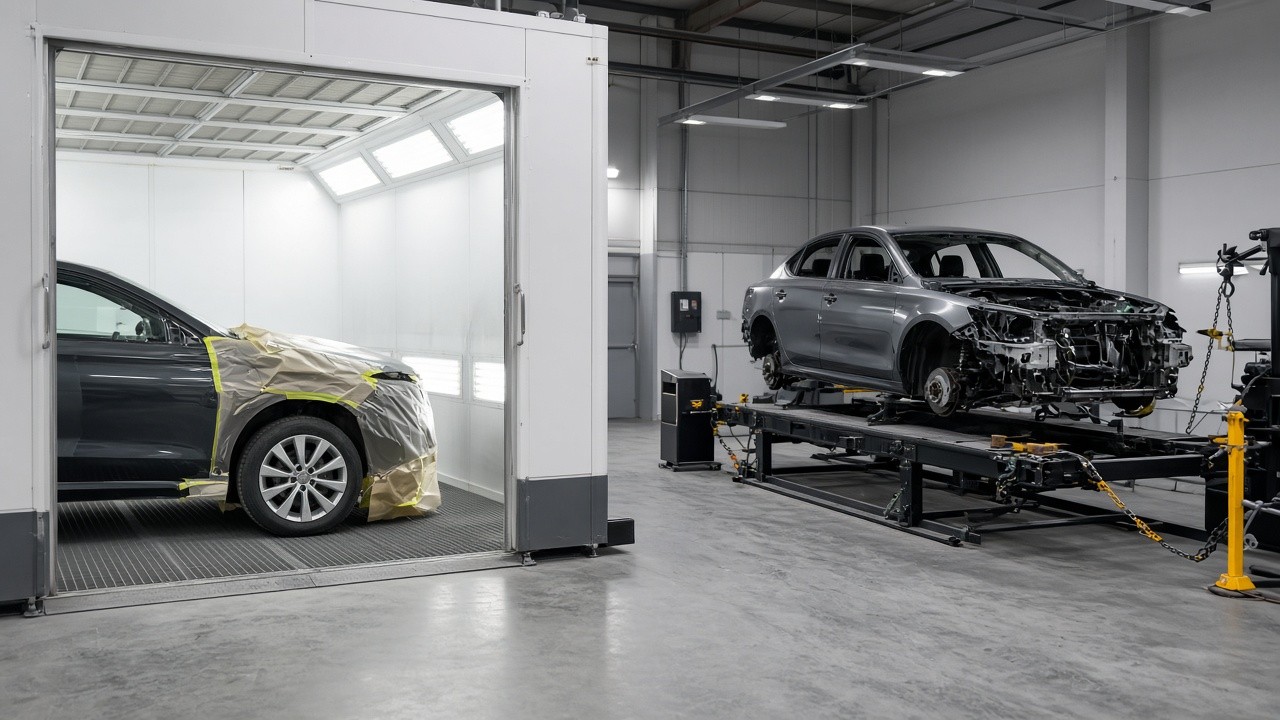
A collision repair website should answer what a driver asks in the days after a crash: how the insurance claim works, whether they have to use the shop their insurer suggests, whether they can send photos for a first estimate, how long repairs usually take, whether they will see photos of the repair, what kinds of parts go on the car, whether safety systems get recalibrated, how the rental car works, what your repair warranty covers, which towns you serve, and how to start. Put those facts in plain text on pages you own. That is the marketing. Design is the layout that makes those facts easy to find and easy for search and AI to cite.
Many people have never been through a collision claim. They are shaken, dealing with an adjuster, and trying to get to work without their car. The body shop that explains the process calmly on its website becomes the one they trust with the car.
Who is reading the site
Collision traffic comes from a few groups.
Drivers right after a crash, often with a claim number and a call from an adjuster. They want to know what to do next and whether you work with their insurance company. They search and ask AI things like collision repair Iowa City, body shop that works with insurance Cedar Rapids, or deer hit repair near Davenport.
Drivers with smaller damage who may pay out of pocket: a parking lot dent, a scraped bumper, a cracked mirror. They want a quick estimate and an honest opinion on whether to file a claim.
Drivers in rural areas after a deer strike, a common crash on Iowa roads in the fall. They need a tow and a shop they can reach.
Fleet managers and dealers who need reliable collision work for many vehicles.
Iowa shops around Iowa City, Cedar Rapids, and the Quad Cities compete the same way collision shops across the Midwest do: explain the claim, show the repairs, and keep the customer informed.
What the homepage has to say in the first screen
In plain HTML text:
1. Shop name, address, and the towns you serve 2. Core work: collision repair, dent and bumper repair, paint, frame and structural repair, calibration, glass — only what you do 3. Phone that reaches the front office 4. Two clear buttons: Start a photo estimate / Schedule an estimate 5. Hours, whether you work with all insurance companies, and licensed and insured if you can keep it honest
Walk through the claim, step by step
This is the page drivers need most. Write it in order:
1. Report the claim to the insurance company and get a claim number 2. Choose a repair shop 3. Get an estimate: photo estimate, drive-in, or adjuster inspection 4. The insurer reviews and approves the estimate 5. The shop orders parts and schedules the repair 6. Hidden damage found during teardown leads to a supplement, which the shop sends to the insurer 7. Repair, paint, calibration, and quality check 8. Pickup, final paperwork, and deductible payment
Explain each step in a sentence or two. Say what the customer does, what you do, and what the insurer does. Say how you handle the deductible and whether you accept direct payment from insurers.
Be clear that coverage decisions belong to the insurance company and the policy. Explain the process and leave the payout to the insurer. Drivers and AI assistants asking “how does a collision claim work in Iowa” get a clear local answer.
Explain the right to choose a shop
Many drivers do not know they usually get to choose where their car is repaired. Insurers may suggest a shop from their network, and that can be a fine choice. It is still the driver’s decision in most cases.
Say this plainly and carefully:
- In Iowa and many other states, drivers generally have the right to choose their repair shop. Point them to the Iowa Insurance Division and their own policy for details.
- Explain what a network or direct repair shop is, and say whether you are part of any insurer networks, without naming them if you prefer.
- Say how you work with insurers when you are not in their network: estimates, photos, supplements, and communication.
- Avoid legal advice. Tell drivers to read their policy and ask their agent if they have questions about coverage.
This is one of the most useful pages a body shop can publish. It answers a question many drivers are afraid to ask the adjuster.
Photos are the core of the process
Collision repair runs on photos. Put that to work on the website.
Photo estimates. Say how to send photos for a first estimate: which angles, close-ups, the VIN, and the odometer. Show an example set. Say that a photo estimate is a starting point and hidden damage may add to it.
Progress photos. Say whether you send customers photos during the repair: teardown, structural work, paint, reassembly. Customers who see the work trust the result. Adjusters appreciate it too.
Before and after gallery. Show real repairs with vehicle type and damage type in the caption, with plates removed. A driver whose SUV hit a deer wants to see another one you fixed.
Parts, calibration, paint, and rentals
Parts. Explain the kinds of parts that may be used: new parts from the vehicle maker, aftermarket parts, and recycled or used parts. Say that the policy may specify which parts the insurer pays for, and that the customer can ask about options.
Calibration. Many newer vehicles have cameras and sensors for safety systems that need calibration after a repair. Say whether you calibrate in-house or send out, and how you confirm systems work before pickup.
Paint. Say how you match color and blend into nearby panels.
Rentals. Say whether you arrange rentals, work with rental companies directly, and how rental coverage depends on the policy.
Service pages that match real jobs
- Collision repair — process, insurance, timelines
- Insurance claims — step by step, supplements, deductibles
- Your right to choose a shop — as above
- Photo estimates — how to send, what to include
- Dent and bumper repair — including paintless dent repair if you offer it
- Frame and structural repair — measuring, equipment
- Calibration — cameras, sensors, confirmation
- Deer strike repair — common Iowa damage, fall season
- Service areas — towns with real repairs
Proof that belongs on a URL you own
- Before and after photos of real repairs with vehicle type and damage type, plates removed
- Photos of your shop: frame bench, paint booth, calibration area
- Reviews on a page you own, with town and repair type when allowed, plus a link to Google Business
- Technician training and shop certifications only if you hold them, with the program named
- License and insurance facts
- Your repair warranty in plain text: what it covers, for how long, and whether it transfers
The estimate path is the conversion
A good photo estimate form asks for:
- Name, phone, email
- Vehicle year, make, model, and VIN
- Photo uploads: each damaged area from several angles, plus the whole car
- Insurance company and claim number, or paying out of pocket
- Is the vehicle drivable
- Need a tow or rental
- Preferred contact method
Put the form on its own URL so Google Business posts, tow companies, and AI answers can link to it. Keep click-to-call in the header.
Content that feeds search and AI without theater
- How a collision claim works, step by step
- Do you have to use the insurance company’s shop?
- How to take photos for a body shop estimate
- What a supplement is, and why repair estimates change
- Hit a deer? What to do next
- Short repair notes: vehicle type, damage, what we replaced and calibrated
Your website stays the source of record for customers and for AI assistants like ChatGPT, Gemini, and Grok. Google Business, Facebook, and tow partners can point back to it. Keep your true process, warranty, and hours on a page you own.
Bots now make a large share of web requests. Drivers still pick body shops, and they still read before they hand over the keys after a crash. Search is changing, and machines more and more decide which shops a driver hears about first. Plain-text claim steps, rights, photos, and warranties on a domain you own keep you in that short list.
Design rules that fit the trade
- Fast on mobile. Drivers look you up from the scene or the tow truck.
- Click-to-call in the header
- High-contrast text and real photos with captions
- Navigation: Collision repair, Insurance claims, Photo estimate, Calibration, Gallery, Reviews, Contact
- No fake reviews or certifications you do not hold
- You own the domain, hosting, and content
What Upley does for shops like this
Upley builds and hosts websites for Iowa and Midwest service businesses. For a collision repair shop that means a clear claim walkthrough, a right-to-choose page, a photo estimate path that works from a phone, a real repair gallery, hosting that stays up for daily crawls, and an easy way to post repairs without turning your techs into marketers.
Same Iowa web team that ran Big Ten Web Design — design, hosting, SEO — plus the modern layer so search and AI can find the true file about your services, process, and towns.
If your current site is a logo and a list of insurance companies, start with the homepage five facts, a claim walkthrough, and a photo estimate form. Then build from there.
Book 30 minutes: /half-hour-meeting/ Call 319-535-2508 · aaron@upley.com Iowa City, Cedar Rapids, Quad Cities / Davenport