
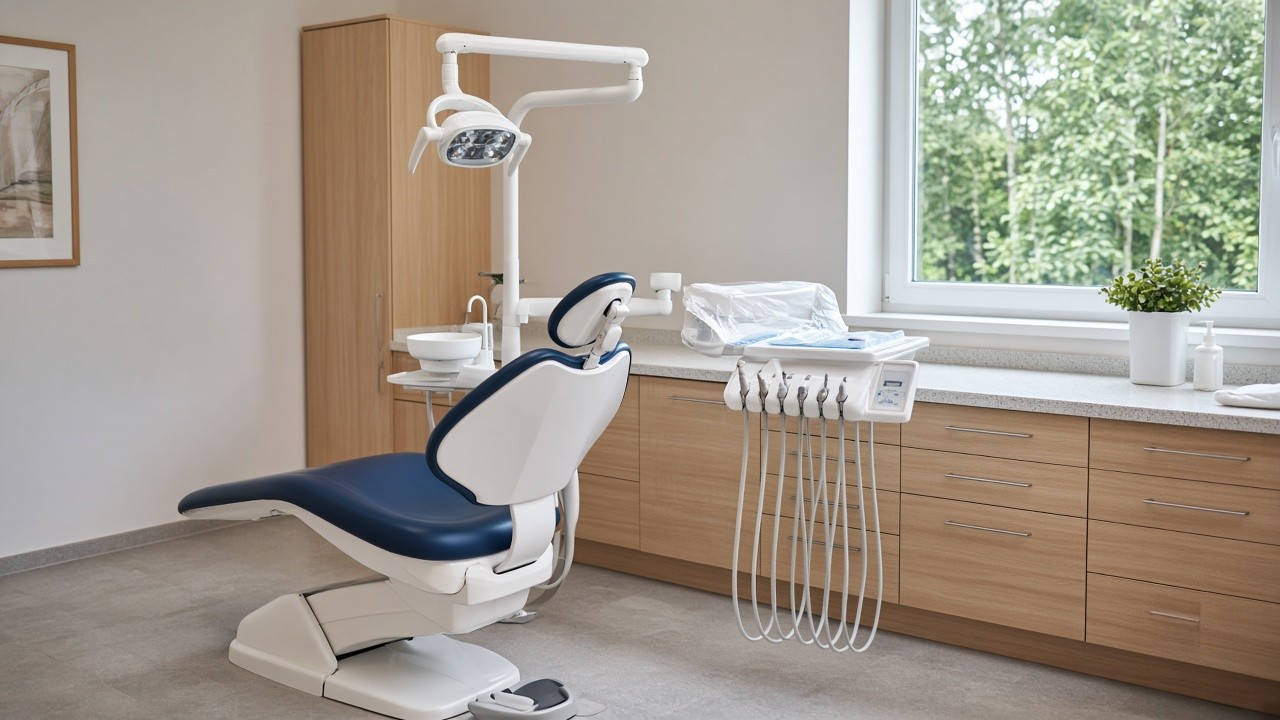
A dental practice website should answer what a patient asks before they call: are you taking new patients, which insurance plans you work with, what the first visit involves, what happens if they have a toothache on a Saturday, who the dentists are, what services you offer, where you are, and when you are open. Put those facts in plain text on pages you own. That is the marketing. Design is the layout that makes those facts easy to find on a phone and easy for search and AI to cite.
Choosing a dentist is a long relationship. People move to town, lose a dentist to retirement, or change jobs and insurance. They compare a few offices, and they tend to pick the one that makes the practical facts clear.
Who is reading the site
Dental traffic comes from a few groups.
New patients who moved to town or changed insurance. They want to know if you accept their plan, if you are taking new patients, and how soon they can get in. They search and ask AI things like dentist accepting new patients Iowa City, dentist that takes my insurance Cedar Rapids, or family dentist North Liberty.
People with a dental emergency. A broken tooth, a swollen jaw, a lost crown. They want to know if you see non-patients, how same-day appointments work, and what to do after hours.
Parents looking for a dentist for kids, and adults looking for a dentist who is patient with nerves.
Current patients checking hours, directions, forms, or a payment question.
Iowa practices serving Iowa City, Cedar Rapids, and the Quad Cities compete the way dental offices do everywhere: make the practical facts easy, show the real team, and make booking simple.
What the homepage has to say in the first screen
In plain HTML text:
1. Practice name, town, and street address 2. Whether you are accepting new patients, stated plainly 3. Phone that reaches the front desk, and online booking if you offer it 4. One clear button: Request an appointment / Call the office 5. Hours, and a short line on what to do for a dental emergency
A word on advertising rules and privacy
Dental advertising is regulated. State dental boards set rules on how dentists advertise, and those rules differ from state to state. Common areas include how you use words like “specialist,” how you describe credentials, how you present testimonials and before-and-after photos, and how you state fees or discounts. Check your state board’s current rules and your professional association’s guidance before you publish.
Patient privacy matters too. Get written consent before you post any patient photo, name, or story. Keep online forms from asking for more health information than you need, and make sure any form that collects health information is set up to handle it properly.
Nothing on the site should promise a result. Describe what a treatment is and what the visit involves. Leave outcomes to the conversation in the chair.
Publish insurance and payment facts
This is the question behind most new-patient calls.
- Insurance plans you are in network with, listed by name, and a date on the list
- Whether you file claims for out-of-network plans
- Whether you accept Medicaid or state dental programs, stated plainly either way
- Payment options, financing partners if any, and any in-house membership plan
- How to get an estimate before treatment
Plans change. Put a “last updated” date on the list and keep it current. A clear insurance page saves your front desk real time, and it gives AI assistants a correct answer when someone asks which dentists near them take their plan.
Explain the first visit and emergencies
New patients:
- What the first visit includes: exam, cleaning, X-rays, or a separate visit
- How long it usually takes
- Forms they can fill out ahead of time
- What to bring: insurance card, medication list, prior records
Emergencies:
- Whether you see non-patients for emergencies
- How same-day appointments work and when to call
- What to do after hours, including when to go to an emergency room
- Plain first-step advice for common problems, kept general and pointing back to a call
Service pages that match how patients search
- General and family dentistry: cleanings, exams, fillings, what to expect
- Children’s dentistry: ages you see, first visits
- Emergency dental care: same-day rules, after-hours instructions
- Crowns, bridges, and implants: what the process involves and who does which step
- Root canals and extractions: when you refer out, if you do
- Cosmetic dentistry: whitening, veneers, bonding, described plainly
- Orthodontics or clear aligners: only if you offer them
- Sedation or anxious patients: only what you actually offer, described carefully
- Location pages: one page per office if you have more than one
Each page should describe what the treatment is, who does it, and what the visit is like. Avoid claims about results or comparisons to other offices.
Proof that belongs on a URL you own
- A team page with each dentist’s name, degree, where they trained, and licensure, stated accurately
- Photos of your actual office, rooms, and staff
- Reviews on a page you own, following your board’s rules on testimonials, plus a link to Google Business
- Professional memberships you actually hold, named plainly
- Accessibility facts: parking, stairs, elevator, wheelchair access
Real photos of your front desk and your team help nervous patients more than stock photos of perfect teeth.
The appointment path is the conversion
A good appointment request form asks for:
- Name, phone, email
- New or current patient
- Insurance plan name
- Reason for visit: cleaning, problem, emergency, consultation
- Preferred days and times
Keep health details out of a basic form. Say how fast the office calls back. If you use online scheduling, put it on its own URL so Google Business posts and AI answers can link to it. Keep click-to-call in the header.
Content that feeds search and AI without theater
Useful posts for a dental practice read like plain explanations:
- What happens at a new-patient visit at our office
- What to do if you crack a tooth on the weekend
- How to read your dental insurance estimate
- When kids should first see a dentist, according to general guidance, with a note to ask your own dentist
- Parking and directions for our office
- What the steps of a crown visit look like
Keep medical claims out. Describe, explain, and point people to call.
Why the website matters more now
Websites and SEO are changing. They still matter, and for dental offices the website matters more now. Bots now make a large share of web requests. People still pick a dentist, and they still compare. More and more, ChatGPT, Gemini, Grok, and Google’s AI answers decide which offices a new family hears about first. Those tools look for clear facts: insurance, new-patient status, hours, location.
Your website should be the source of record. Google Business, insurance directories, and review sites can point back to it. Keep the true insurance list, hours, and new-patient status on a domain you own.
Design rules that fit a practice
- Fast on mobile, and readable for older patients
- Click-to-call and an appointment button in the header
- High-contrast text and large type
- Navigation: New patients, Insurance, Services, Emergencies, Our team, Location, Contact
- No fake reviews, invented awards, or result promises
- You own the domain, hosting, and content
What Upley does for practices like this
Upley builds and hosts websites for Iowa and Midwest businesses, including practices with rules to follow. For a dental office that means clear new-patient, insurance, and emergency pages, a team page that reads accurately, forms built to ask only what they should, hosting that stays up for daily crawls, and an easy way to post office updates. You and your compliance advisers review anything before it goes live.
Same Iowa web team that ran Big Ten Web Design, handling design, hosting, and SEO, plus the modern layer so search and AI can find the true file about your practice, insurance, and hours.
If your current site has a stock smile photo and no insurance list, start with the homepage five facts, an insurance page with a date on it, and a new-patient page. Then build from the appointment form.
Book 30 minutes: /half-hour-meeting/ Call 319-535-2508 · aaron@upley.com Iowa City, Cedar Rapids, Quad Cities / Davenport