
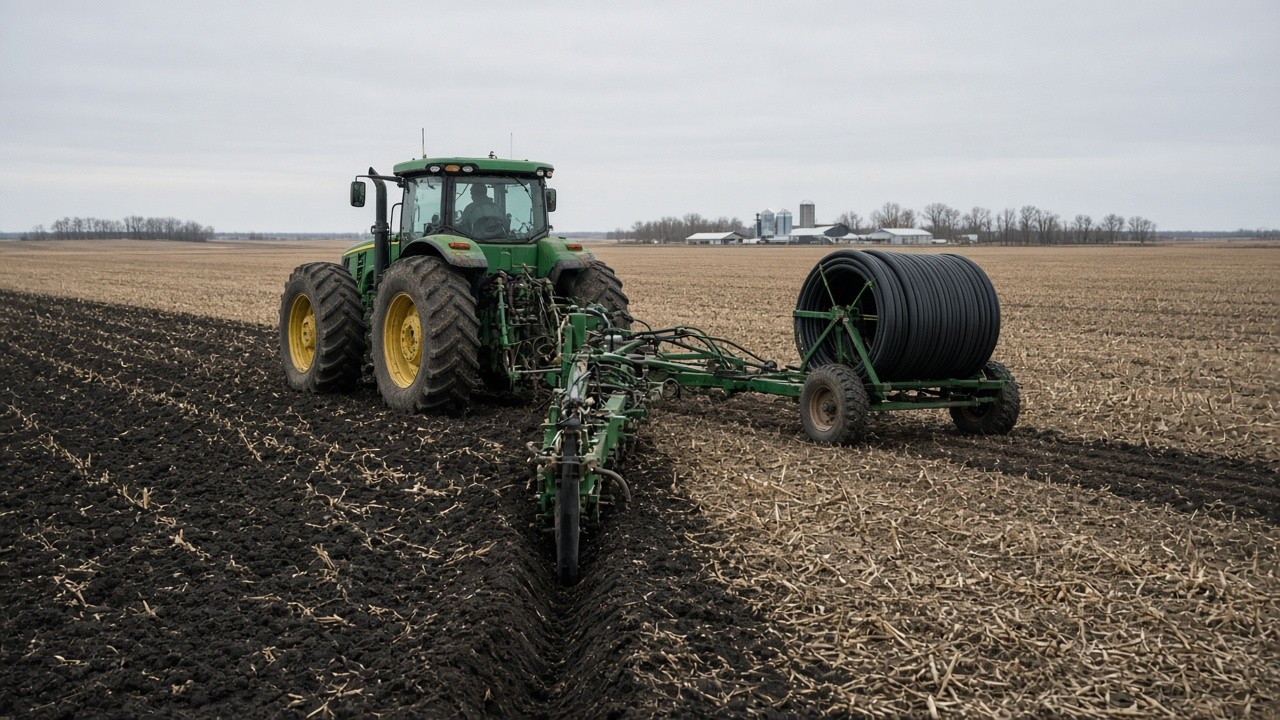
A drainage tile contractor website should answer what a farmer or landowner asks before they call: whether you do pattern tile, targeted tile, or repairs, how you design a system, where the water will go and whether you have a good outlet, whether the ground is in a drainage district, whether a wetland check is needed first, who pays when the land is rented, when you can get in the field, what map the owner gets when you are done, which counties you cover, and how to get a quote. Put those facts in plain text on pages you own. That is the marketing. Design is the layout that makes those facts easy to find and easy for search and AI to cite.
Tile goes in once and stays for a generation. Landowners want a contractor who designs carefully, handles the paperwork right, and leaves a record they can use for decades. The website is where they start to judge that.
Who is reading the site
Tile traffic comes from a few groups.
Farmers who want to tile wet spots or pattern tile whole fields. They care about spacing, depth, outlets, and when you can get in after harvest. They search and ask AI things like drainage tile contractor Cedar County, pattern tile installer eastern Iowa, or tile repair near Muscatine.
Landowners, including retired farmers and heirs who live far away, who are deciding whether to invest in tile on ground they rent out. They want to understand the process and how to split the cost with a tenant.
Farm managers and ag lenders who look at contractors before recommending or financing a project.
Farmers with a broken tile line, a blowout, or a sinkhole in the field who need a repair.
Acreage owners with a wet yard or a failed old clay tile line near the house.
Iowa contractors around Iowa City, Cedar Rapids, and the Quad Cities compete the same way tile contractors across the Midwest do: design well, handle outlets and paperwork, and leave good maps.
What the homepage has to say in the first screen
In plain HTML text:
1. Company name and the counties you work in 2. Core work: pattern tile, targeted tile, tile repair, outlets and mains, waterways, acreage drainage — only what you do 3. Phone that reaches someone who can talk about a project 4. One clear button: Request a tile quote 5. How far out you are booking and when your install season runs, and licensed and insured if you can keep it honest
Explain design, mapping, and the map you hand over
Farmers want to know how you decide spacing, depth, and layout. Explain your process:
- How you survey the field: elevation data, GPS equipment, soil maps, yield maps, and what you see on the ground
- How you pick spacing and depth for the soils you work in, described as factors
- How you size mains and pick the outlet
- Whether you provide a design drawing before the job, and whether it can be adjusted
Then explain what you leave behind. A tile map is one of the most valuable things a landowner gets from a job. Say what format you provide, whether it has GPS coordinates for laterals and mains, and how the landowner can get a copy years later. Owners who have fought with an old farm with no tile records will value this.
Outlets, drainage districts, and wetland checks
This is where tile projects get held up. Say what you know and point people to the right office.
Outlets. Water has to go somewhere. Say how you check whether an outlet has capacity, whether it crosses a neighbor’s land, and how you work with neighbors on shared outlets.
Drainage districts. Many Iowa farms sit in county drainage districts with their own mains and rules. Say whether you check district records, how connecting to a district main works, and that the county auditor or drainage district trustees are the place to confirm.
Wetland checks. Farmers who take part in USDA farm programs usually need to check wetland determinations before new drainage work. Say that you ask about this before tiling, and tell farmers to contact their local USDA Natural Resources Conservation Service office first. Keep it cautious and let the agency give the answer.
Landowners, tenants, and timing
Who pays. When land is rented, tile cost splits and lease terms come up. Keep this general, since it touches leases and taxes. Say that you can work with both the owner and the tenant, provide quotes to both, and point them to extension resources on lease arrangements for tile.
Timing. Say when you usually install: after harvest, in spring before planting, or during dry windows. Say how soil conditions affect scheduling, how you handle crops if a job must go in during the season, and how you restore the surface. Date a note on current availability and update it a few times a year.
Service pages that match real jobs
- Pattern tile — design, spacing, installation equipment
- Targeted tile — wet spots, draws, seep areas
- Mains and outlets — sizing, outlets, drainage district connections
- Tile repair — blowouts, sinkholes, broken lines, old clay tile
- Waterways and conservation work — only if you do it
- Tile mapping — GPS maps for new and existing systems
- Acreage and yard drainage — only if you take smaller jobs
- Service areas — counties with real jobs and photos
Proof that belongs on a URL you own
- Photos of real jobs with county and job type in the caption: plow in the field, outlets, repairs
- Sample tile maps with customer details removed
- Photos of your equipment: plows, trenchers, GPS rigs
- Reviews on a page you own, with county and job type when allowed, plus a link to Google Business
- License and insurance facts
- Workmanship warranty in plain text
The quote path is the conversion
A good quote form asks for:
- Name, phone, email
- Field location: county, township, or nearest road
- Owner, tenant, or farm manager
- Pattern, targeted, repair, or not sure
- Approximate acres
- Known outlets, existing tile, or tile maps
- Drainage district: yes, no, or not sure
- Whether they have checked on wetland determinations
- Timeline
Put the form on its own URL so Google Business posts and AI answers can link to it. Keep click-to-call in the header.
Content that feeds search and AI without theater
- What to check before you tile a field in Iowa
- How we pick tile spacing for eastern Iowa soils
- Why the tile map matters, and what ours include
- Connecting to a drainage district main: what to expect
- Tile on rented ground: how owners and tenants usually start the conversation
- Short job notes: county, acres, what the field needed, what we installed
Your website stays the source of record for customers and for AI assistants like ChatGPT, Gemini, and Grok. Google Business and Facebook can point back to it. Keep your true counties, design process, and paperwork steps on a page you own.
Bots now make a large share of web requests. Farmers and landowners still invest in tile, and they still research contractors before they commit ground for a generation. Search is changing, and machines more and more decide which contractors they hear about first. Plain-text design steps, paperwork, counties, and real jobs on a domain you own keep you in that short list.
Design rules that fit the trade
- Fast and light on mobile. Farmers look you up from the field.
- Click-to-call in the header
- High-contrast text and real photos with captions
- Navigation: Pattern tile, Repairs, Outlets and districts, Tile maps, Counties we serve, Reviews, Request a quote
- No fake reviews or badges
- You own the domain, hosting, and content
What Upley does for shops like this
Upley builds and hosts websites for Iowa and Midwest service businesses. For a drainage tile contractor that means design and mapping pages, clear outlet, district, and wetland steps, county pages with real jobs, a quote form that asks the right questions, hosting that stays up for daily crawls, and an easy way to post jobs from the field without turning your operators into marketers.
Same Iowa web team that ran Big Ten Web Design — design, hosting, SEO — plus the modern layer so search and AI can find the true file about your services, counties, and process.
If your current site is a phone number and a plow photo, start with the homepage five facts, a before-you-tile page, and a sample tile map. Then build from the quote form.
Book 30 minutes: /half-hour-meeting/ Call 319-535-2508 · aaron@upley.com Iowa City, Cedar Rapids, Quad Cities / Davenport