
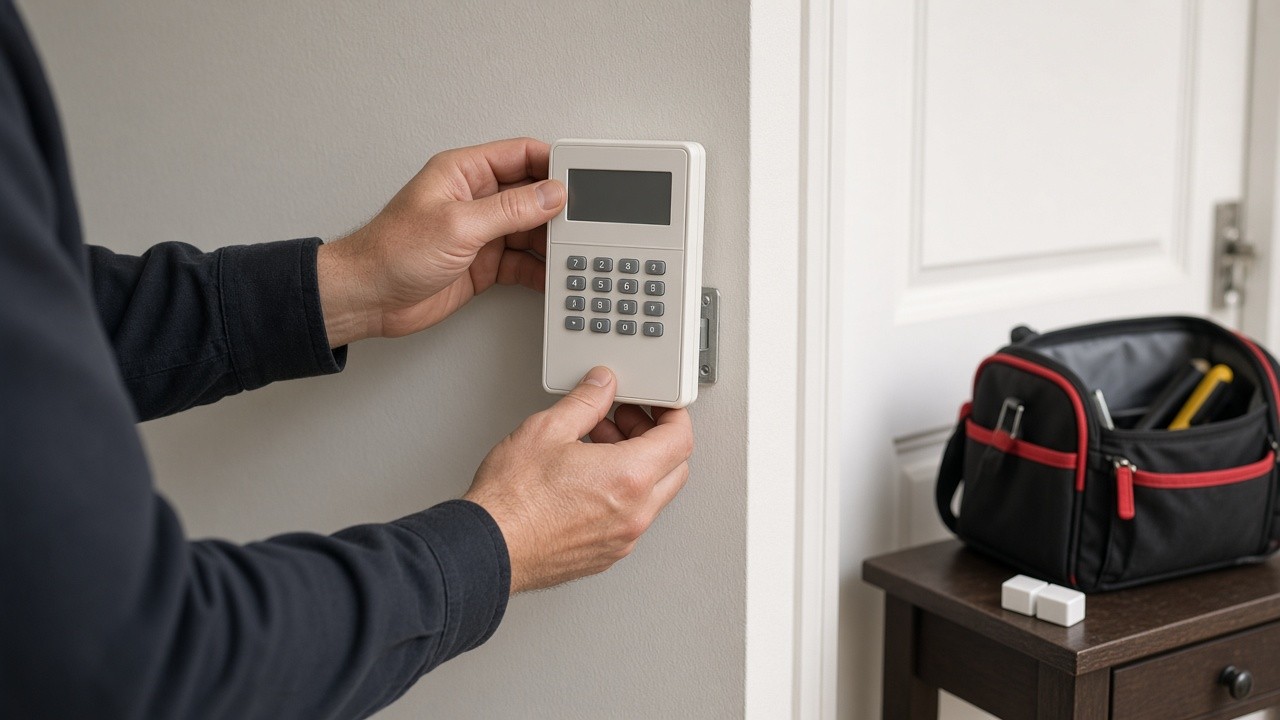
A security and alarm installer website should answer what a homeowner or business owner asks before they sign anything: what systems you install, whether monitoring is required, how long the contract runs and how to cancel, who watches the alarm and what happens when it goes off, whether their city requires an alarm permit, how you handle false alarms, whether cameras work on their rural internet, who owns the equipment, whether your technicians are licensed, which towns you serve, and how to get a quote. Put those facts in plain text on pages you own. That is the marketing. Design is the layout that makes those facts easy to find and easy for search and AI to cite.
Many people have heard stories about long alarm contracts that are hard to get out of. The local installer who posts the contract terms and the alarm response steps on the website wins the customers who are tired of fine print.
Who is reading the site
Security traffic comes from a few groups.
Homeowners who want an alarm, cameras, or smart locks after a break-in nearby, a new baby, or a move. They search and ask AI things like home security installer Iowa City, alarm monitoring Cedar Rapids, or security cameras installed Davenport.
Small businesses, churches, clinics, and offices that need alarms, cameras, access control, and sometimes fire alarm systems.
Rural homeowners and farms who want cameras on shops, bins, and gates, and need to know what works without fast internet.
Customers who bought a house with an old system and want to know if it can be reused or taken over.
Customers who want to leave a national provider and switch to local service.
Iowa installers around Iowa City, Cedar Rapids, and the Quad Cities compete the same way local security companies across the Midwest do: be clear about contracts, explain the response, and install cleanly.
What the homepage has to say in the first screen
In plain HTML text:
1. Company name and the towns you serve 2. Core work: burglar alarms, monitoring, cameras, access control, fire alarms, smart locks — only what you install 3. Phone that reaches someone who can answer questions 4. One clear button: Get a security quote 5. Whether monitoring is optional or required, contract length in plain words, and licensed and insured if you can keep it honest
Publish the contract terms
This is the page that earns trust fastest.
Write down:
- Whether monitoring is required to buy equipment from you
- Contract length options, including month-to-month if you offer it
- What happens at the end of a term: auto-renewal, notice needed, how to cancel
- Who owns the equipment: the customer, or you until the contract ends
- What happens if the customer moves
- Whether you take over existing systems and what that costs to check, described as a practice
- How price changes are handled during a contract
You do not need to list prices. Clear terms in plain words set you apart from the fine print customers fear. Tell customers to read the full agreement before signing, and link to a sample.
Explain what happens when the alarm goes off
Customers want to know who is watching and what happens next. Write it step by step:
1. The system sends a signal to the monitoring center 2. The center tries to reach the customer or their contacts, in the order they choose 3. If there is no answer or the customer confirms an emergency, the center requests police, fire, or medical help 4. The customer gets notified by app, text, or call
Say whether you run your own monitoring center or use a third-party center, and whether it is listed with a recognized testing laboratory, only if true. Say how cellular or radio backup works if the internet or phone line is out.
A clear response page answers a question many buyers have, and it gives AI assistants a plain answer when someone asks how alarm monitoring works.
False alarms, permits, and privacy
Alarm permits and false alarms. Some Iowa cities require alarm permits or charge fees for repeated false alarms. Rules differ by town. Say which towns you know have rules, link to each city’s page, and tell customers to check with their city. Explain what you do to prevent false alarms: setup, training, pet-friendly sensors, and verified response options.
Camera privacy. Customers often ask where they can point cameras and whether they can record audio. Keep this general: say that laws on recording audio and aiming cameras at neighbors or public spaces vary, suggest they check local and state rules, and explain how you help place cameras to cover their property. Avoid legal advice.
Fire alarms. If you install commercial fire alarm systems, say that they are governed by fire codes and local fire marshal review, and that licensed designers and installers handle them. Only say this if it is real work for you.
Rural connectivity and licensing
Rural connectivity. Many rural customers do not have fast internet. Say what works in those cases: cellular communicators, local recording, lower-resolution streaming, and whether you have tested camera systems on farm sites. Photos of cameras on real shops and bin sites help.
Licensing. Iowa and some cities have licensing or registration rules for alarm and low-voltage work. Say what licenses and registrations your company and technicians hold, only if real, and how to verify them. Tell customers to check current state and local requirements.
Service pages that match real jobs
- Home alarm systems — sensors, keypads, apps, installation
- Alarm monitoring — response steps, backup communication, contract terms
- Security cameras — home, business, farm, rural connectivity
- Access control — keycards, keypads, door hardware for businesses
- Fire alarm systems — commercial, only if you do them
- Smart locks and doorbells — only what you install
- System takeovers — existing systems, switching providers
- Farm and rural security — shops, bins, gates
- Service areas — towns with real installs
Proof that belongs on a URL you own
- Photos of real installs with town and system type in the caption: clean camera mounts, keypad placement, hidden wiring
- Screenshots of the customer app with personal details removed
- Reviews on a page you own, with town and system type when allowed, plus a link to Google Business
- License, registration, and insurance facts, and how to verify them
- A sample monitoring agreement
- Warranty terms in plain text for equipment and installation
The quote path is the conversion
A good quote form asks for:
- Name, phone, email
- Address or town
- Home, business, or farm
- Alarm, cameras, access control, fire, or a mix
- Existing system: yes or no, with brand if known
- Internet type at the property: cable, fiber, fixed wireless, satellite, or none
- Monitoring: interested, not sure, or self-monitor only
- Timeline
Put the form on its own URL so Google Business posts and AI answers can link to it. Keep click-to-call in the header.
Content that feeds search and AI without theater
- What our monitoring contract says, in plain words
- What happens when your alarm goes off at 2 a.m.
- Security cameras on a farm with slow internet: what works
- Do you need an alarm permit in Iowa City?
- Can we take over the system that came with your house?
- Short install notes: town, property type, what we installed
Your website stays the source of record for customers and for AI assistants like ChatGPT, Gemini, and Grok. Google Business, Facebook, and Nextdoor can point back to it. Keep your true contract terms, response steps, and licensing on a page you own.
Bots now make a large share of web requests. People still hire local security companies, and they still read the terms before they sign. Search is changing, and machines more and more decide which installers a homeowner or business owner hears about first. Plain-text terms, response steps, licensing, and real installs on a domain you own keep you in that short list.
Design rules that fit the trade
- Fast on mobile
- Click-to-call in the header
- High-contrast text and real photos with captions
- Navigation: Home security, Business security, Cameras, Monitoring, Contract terms, Farm and rural, Reviews, Get a quote
- No scare copy, fake reviews, or certifications you do not hold
- You own the domain, hosting, and content
What Upley does for shops like this
Upley builds and hosts websites for Iowa and Midwest service businesses. For a security and alarm installer that means a plain contract terms page, a response steps page, clear permit and licensing facts, a quote form that asks about connectivity, hosting that stays up for daily crawls, and an easy way to post installs without turning your techs into marketers.
Same Iowa web team that ran Big Ten Web Design — design, hosting, SEO — plus the modern layer so search and AI can find the true file about your services, terms, and towns.
If your current site is a stock photo of a burglar and a phone number, start with the homepage five facts, a contract terms page, and a response steps page. Then build from the quote form.
Book 30 minutes: /half-hour-meeting/ Call 319-535-2508 · aaron@upley.com Iowa City, Cedar Rapids, Quad Cities / Davenport