
A self-storage website should answer what a renter asks before they call: what sizes you have, what fits in each one, what they cost, whether a unit is open today, when they can get in, whether units are climate controlled, how the gate and security work, what the lease says about late payments, and whether they can rent online. Put those facts in plain text on pages you own. That is the marketing. Design is the layout that makes those facts easy to compare on a phone and easy for search and AI to cite.
Storage is a comparison purchase. People look at two or three facilities nearby and pick on price, location, size, and access. The site that shows those facts clearly, without making people call for a price, gets the rental.
Who is reading the site
Self-storage renters come in a few groups.
People in the middle of a move. Between houses, waiting on a closing, or moving out of an apartment before the next lease starts. In Iowa City, the August lease turnover and the end of the semester bring a wave of students and renters. They search and ask AI things like storage units Iowa City, cheap storage near University of Iowa, or 10×10 storage Coralville.
Homeowners clearing space. A remodel, a new baby, a family member moving in. They want the right size and easy access.
People storing vehicles, boats, campers, and farm equipment. They want outdoor or covered parking, sizes, and whether the gate fits a trailer.
Small businesses storing inventory, tools, or records. They want access hours, deliveries, and invoices.
Rural renters in small towns, where the facility may be a few rows of units off the highway with no office staff on site. They need the website even more, because it is the office.
Iowa facilities in Iowa City, Cedar Rapids, the Quad Cities, and small towns compete the way storage does everywhere: clear sizes, clear prices, clear access.
What the homepage has to say in the first screen
In plain HTML text:
1. Facility name, street address, and town 2. Unit types: standard, climate controlled, drive-up, vehicle and RV parking, only what you have 3. Phone that reaches someone, and one clear button: See sizes and prices / Rent online 4. Office hours and gate access hours, listed separately 5. Security basics: gated, keypad, cameras, lighting, only what is real
Publish sizes and prices
This is the page that decides most rentals.
- Every unit size with real dimensions and door size
- What fits in each: a studio apartment, a two-bedroom house, a car, with a plain description
- Current prices, or a clear range with a note on what changes it
- Which sizes are open today, if your system can show it
- Move-in specials in plain words, including what the rate becomes after the special ends
- Admin fees, deposits, required lock or insurance costs
Showing prices on the site builds trust. Hiding them behind a phone call sends people to the facility down the road that shows its numbers. A clear size and price page also gives AI assistants a correct answer when someone asks what a 10×10 costs near them.
Explain access, security, and climate control
- Office hours and gate hours, separately
- How gate codes work and how renters get theirs
- Cameras, lighting, fencing, on-site manager, only what you actually have
- Which units are climate controlled, and what that means at your facility
- Whether drive-up units fit a truck or trailer at the door
- Whether you accept deliveries for renters
Iowa weather matters here. Say what climate control does in a humid July and a cold January, and which items people usually want in a climate-controlled unit.
Publish lease, payment, and late-fee rules
Storage has rules people should know before they sign.
- Month-to-month or longer terms
- How to pay: online, autopay, in person
- Late fees and when they apply
- What happens if rent goes unpaid for a long time. State law governs storage liens and sales. Explain your process in plain words and point people to the lease.
- Whether you require storage insurance or accept a homeowners policy
- Items not allowed in units
Plain rules protect you and your renters. They also cut down on angry calls.
Service pages that match how people search
- Standard units: sizes, prices, what fits
- Climate-controlled units: sizes, prices, what climate control means here
- Drive-up units
- Vehicle, boat, and RV storage: outdoor or covered, sizes, gate clearance
- Business storage: deliveries, access, invoicing
- Student storage: summer and August timing, short terms, only if you offer them
- Moving supplies: boxes, locks, tape, only if you sell them
- Location pages: one page per facility if you have more than one, each with its own address, hours, and photos
Proof that belongs on a URL you own
- Photos of your actual facility: gate, driveways, hallways, units open and closed
- A short walk-through video, if you can
- Reviews on a page you own, plus a link to Google Business
- The name of the manager or owner and how to reach them
- Clear directions, with landmarks for people who do not know the area
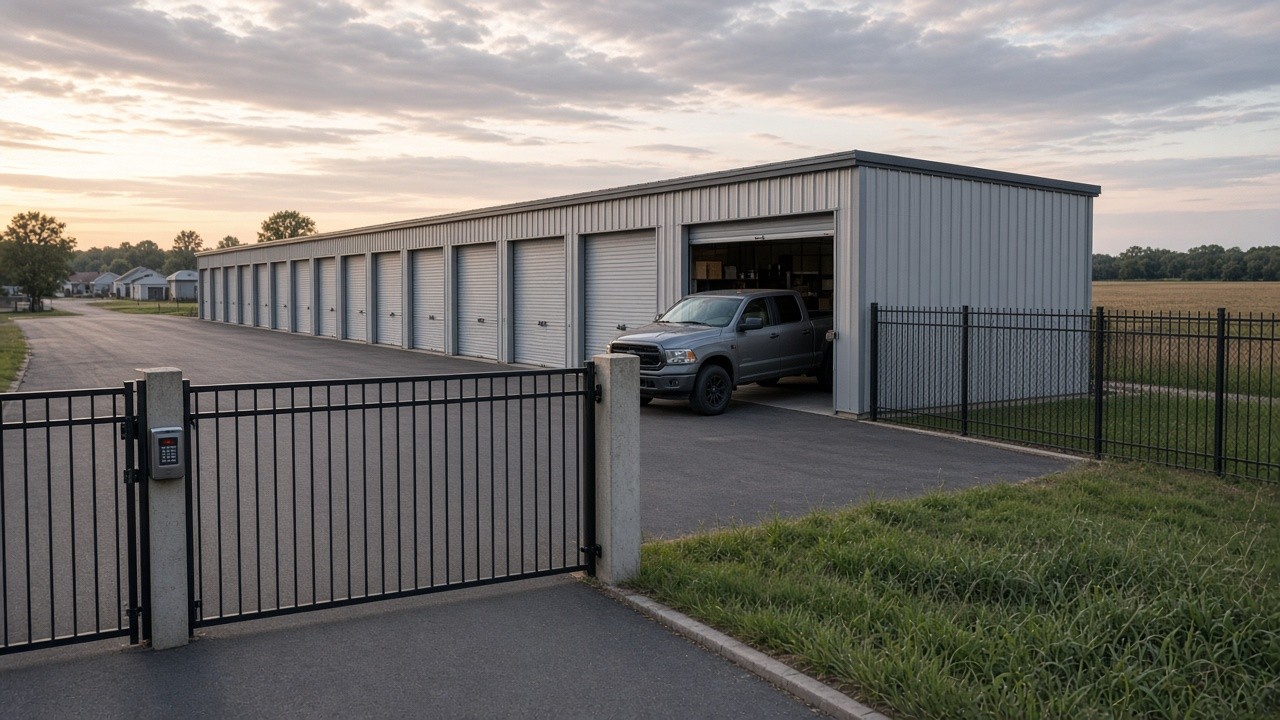
A photo of your real gate and driveway helps a renter picture pulling in with a trailer. A stock photo of a shiny hallway could be anywhere.
The rental path is the conversion
Many renters want to reserve or rent online, day or night. If you offer it, make it easy:
- Pick a size and see the price
- Reserve or rent with a move-in date
- Sign the lease and pay online
- Get the gate code and unit number
If you rent by phone or in person, give a short form: name, phone, email, size wanted, move-in date. Say how fast you reply. Put the rental or reservation page on its own URL so Google Business posts and AI answers can link to it.
Content that feeds search and AI without theater
Useful posts for a storage facility read like plain answers:
- What fits in a 5×10, 10×10, and 10×20, with photos
- Climate control in Iowa: when it matters and when it does not
- How to pack a storage unit so you can find things later
- Student storage for the August turnover in Iowa City
- Storing a boat or camper over an Iowa winter
- What to do before you move out of your unit
Why the website matters more now
Websites and SEO are changing. They still matter, and for storage they matter more now. Bots now make a large share of web requests. People still rent storage, and they still compare. More and more, ChatGPT, Gemini, Grok, and Google’s AI answers decide which facilities a renter hears about first. Those tools look for clear facts: sizes, prices, hours, location.
Your website should be the source of record. Google Business and storage marketplace listings can point back to it. Keep the true sizes, prices, access hours, and rules on a domain you own.
Design rules that fit a facility
- Fast on mobile. People compare facilities from their phones.
- A size-and-price table readable on a small screen
- Click-to-call and a rent button in the header
- Navigation: Sizes and prices, Climate controlled, Vehicle storage, Rent online, Rules, Location, Contact
- No fake reviews or specials with hidden terms
- You own the domain, hosting, and content
What Upley does for facilities like this
Upley builds and hosts websites for Iowa and Midwest businesses. For a self-storage facility that means a clear size and price page, access and rules pages, a rental path that works from a phone, hosting that stays up for daily crawls, and an easy way to post updates and photos.
Same Iowa web team that ran Big Ten Web Design, handling design, hosting, and SEO, plus the modern layer so search and AI can find the true file about your facility, sizes, and hours.
If your current site says “call for pricing,” start with the homepage five facts and a size and price page. Then build from the rental path.
Book 30 minutes: /half-hour-meeting/ Call 319-535-2508 · aaron@upley.com Iowa City, Cedar Rapids, Quad Cities / Davenport