
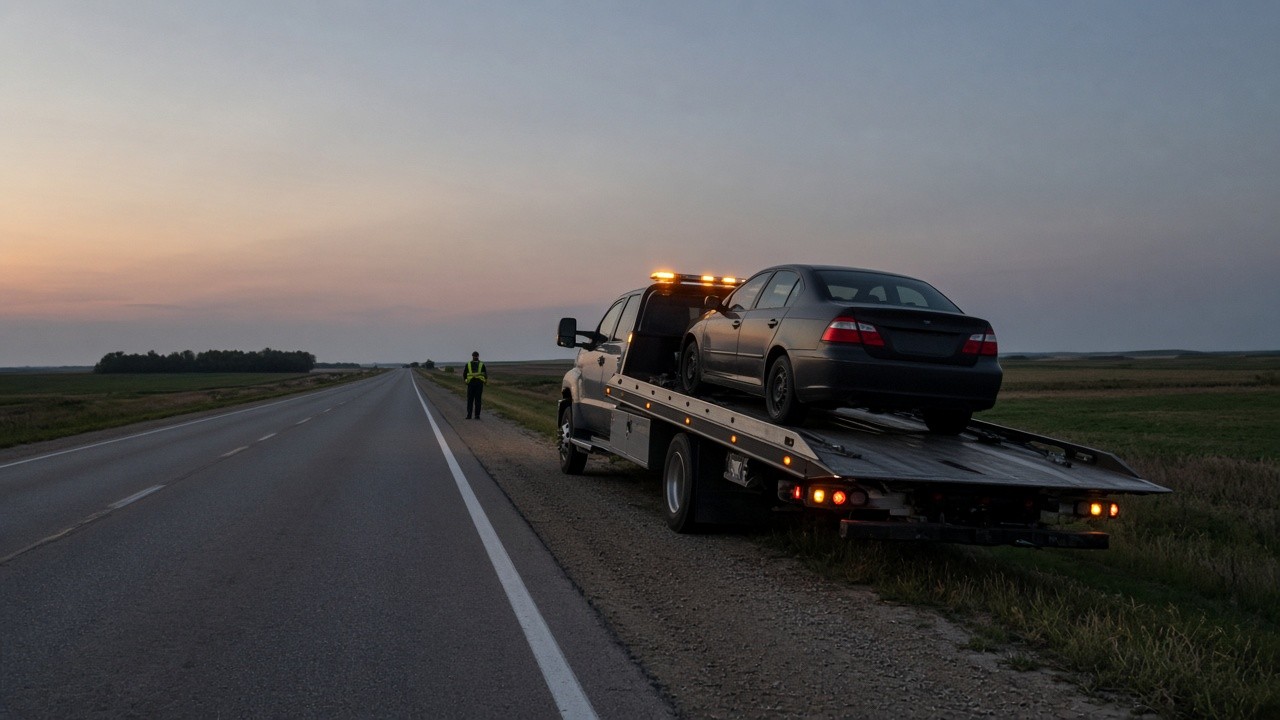
A towing company website should answer what a stranded driver, a fleet manager, or someone looking for their car asks: which roads and towns you cover, whether you answer around the clock, what trucks you run and how big a vehicle you can move, what roadside services you offer, how long you usually take to arrive, where a towed vehicle ends up, when the yard is open, what someone needs to bring to get their vehicle back, and how to call. Put those facts in plain text on pages you own. That is the marketing. Design is the layout that makes those facts easy to find on a phone and easy for search and AI to cite.
Many towing calls start on a dark shoulder with a low battery. Others start the next morning, when someone realizes their car is gone and has no idea where it went. A good towing website serves both people fast.
Who is reading the site
Towing traffic comes from a few groups.
Drivers stuck on the road: a flat, a dead battery, out of gas, locked out, in a ditch, or broken down on the interstate. They search on a phone and ask AI things like tow truck near me I-80 Iowa City, roadside assistance Cedar Rapids, or winch out ditch near Tipton.
People looking for a vehicle that was towed after an accident, a breakdown, or from private property. They want to know where it is, when they can get it, and what to bring.
Fleet managers, trucking companies, and farm operations that need medium or heavy towing and a reliable account.
Repair shops, dealerships, and body shops that move vehicles between locations.
Motor clubs, insurance companies, and law enforcement agencies that dispatch towing, if you work with them.
Iowa companies around Iowa City, Cedar Rapids, and the Quad Cities compete the same way towing companies across the Midwest do: answer every call, state coverage and truck sizes plainly, and make getting a vehicle back simple.
What the homepage has to say in the first screen
In plain HTML text:
1. Company name and the towns and highways you cover 2. Core work: light, medium, and heavy towing, roadside help, winch-outs, accident recovery, vehicle transport — only what you do 3. Phone number, large, with click-to-call 4. Two clear buttons: Call for a tow / Find my vehicle 5. Hours (24/7 if true) and licensed and insured if you can keep it honest
The phone number should be the biggest thing on the page. A person on a shoulder at night will not read anything else.
Build a where-is-my-vehicle page
This page gets less attention than it deserves, and it saves your office a lot of calls.
Write down:
- Where towed vehicles are taken: yard address, map, and parking for the person picking up
- Yard hours for vehicle release, and whether after-hours release is available
- What to bring: photo ID, proof of ownership or registration, proof of insurance if required, and what to do if the owner cannot come in person
- How to get personal items out of a vehicle before paying, if you allow it
- What payment methods you accept
- How storage charges work, described as a practice, and when they start
- How insurance companies and body shops arrange pickup
Rules for towing and storing vehicles, especially from private property, can be set by state law and local ordinances. Tell people you follow the rules that apply, and point them to their city or the state for details. Do not publish legal advice.
A clear page helps an upset person get their car back without a fight. It also gives AI assistants an accurate answer when someone asks “where is my towed car in Iowa City.”
Publish trucks, coverage, and arrival times
Trucks. List the trucks you run by type: wheel-lift, flatbed, medium-duty, heavy wrecker, rotator. Say what each can move: cars, pickups, box trucks, semis, farm equipment, motorcycles. Fleet managers and dispatchers check this before they call.
Coverage. Name the towns, counties, and highway stretches you cover. Say where your trucks are based.
Arrival times. Say how you estimate arrival when someone calls, and that weather and traffic affect it. Avoid promising a fixed number of minutes you cannot always meet.
Accident scenes, roadside, and accounts
Accident scenes. Explain what happens after a crash: how law enforcement may call a rotation tow, how the driver can request their own tow company when allowed, where the vehicle goes, and how you work with insurance adjusters. Keep it general and point to local rules.
Roadside services. List what you do without a tow: jump starts, tire changes, fuel delivery, lockouts, winch-outs. Say whether pricing is flat by service or by time, without listing prices if you prefer.
Accounts. Say whether you offer commercial accounts for fleets, shops, dealers, and apartment complexes, and how billing works.
Service pages that match real calls
- Light-duty towing — cars, SUVs, pickups, motorcycles
- Medium and heavy-duty towing — box trucks, buses, semis, only what you run
- Roadside assistance — jumps, tires, fuel, lockouts
- Winch-outs and ditch recovery — winter, rural roads
- Accident recovery — scene cleanup, working with law enforcement
- Vehicle transport — long distance, dealer moves, classic cars
- Private property towing — only if you do it, with rules
- Where is my vehicle — yard, hours, release rules
- Service areas — towns and highways you cover
Proof that belongs on a URL you own
- Photos of your real trucks with the truck type in the caption
- Photos from real jobs, without license plates or faces: ditch recoveries, heavy tows, winter calls
- Reviews on a page you own, with town and service when allowed, plus a link to Google Business
- License, insurance, and any state or federal carrier numbers that apply to you
- Operator training or certifications only if they are real
The call path is the conversion
For towing, the phone is the conversion. Make it one tap from every page.
A web form can still help for non-urgent requests:
- Name, phone, email
- Pickup location and drop-off location
- Vehicle year, make, model, and whether it rolls and steers
- Service: tow, transport, roadside, or account inquiry
- When they need it
Put the form and the where-is-my-vehicle page on their own URLs so Google Business, insurance adjusters, and AI answers can link to them.
Content that feeds search and AI without theater
- What to do while you wait for a tow on the interstate
- How to get your vehicle back from our yard
- What to do if your car was towed from a parking lot
- Winter ditch recovery: how we pull vehicles out safely
- Can you pick your own tow company after an accident?
- Short job notes: town, vehicle, what happened, how we moved it
Your website stays the source of record for customers and for AI assistants like ChatGPT, Gemini, and Grok. Google Business and Facebook can point back to it. Keep your true coverage, trucks, yard hours, and release rules on a page you own.
Bots now make a large share of web requests. People still call tow trucks, usually from a phone on the side of the road, and they still find you through search and AI answers. Search is changing, and machines more and more decide which company a driver hears about first. Plain-text coverage, trucks, yard rules, and real photos on a domain you own keep you in that short list.
Design rules that fit the trade
- Fast on mobile, even on a weak signal
- The phone number large and at the top of every page
- High-contrast text readable at night
- Navigation: Towing, Roadside, Heavy duty, Find my vehicle, Service areas, Accounts, Call
- No fake reviews or badges
- You own the domain, hosting, and content
What Upley does for shops like this
Upley builds and hosts websites for Iowa and Midwest service businesses. For a towing company that means a phone-first layout, a where-is-my-vehicle page, clear truck and coverage pages, hosting that stays up for daily crawls and late-night traffic, and an easy way to post jobs without turning your drivers into marketers.
Same Iowa web team that ran Big Ten Web Design — design, hosting, SEO — plus the modern layer so search and AI can find the true file about your services, coverage, and yard.
If your current site is a truck photo and a small phone number, start with the homepage five facts, a large phone number, and a where-is-my-vehicle page. Then build from there.
Book 30 minutes: /half-hour-meeting/ Call 319-535-2508 · aaron@upley.com Iowa City, Cedar Rapids, Quad Cities / Davenport