
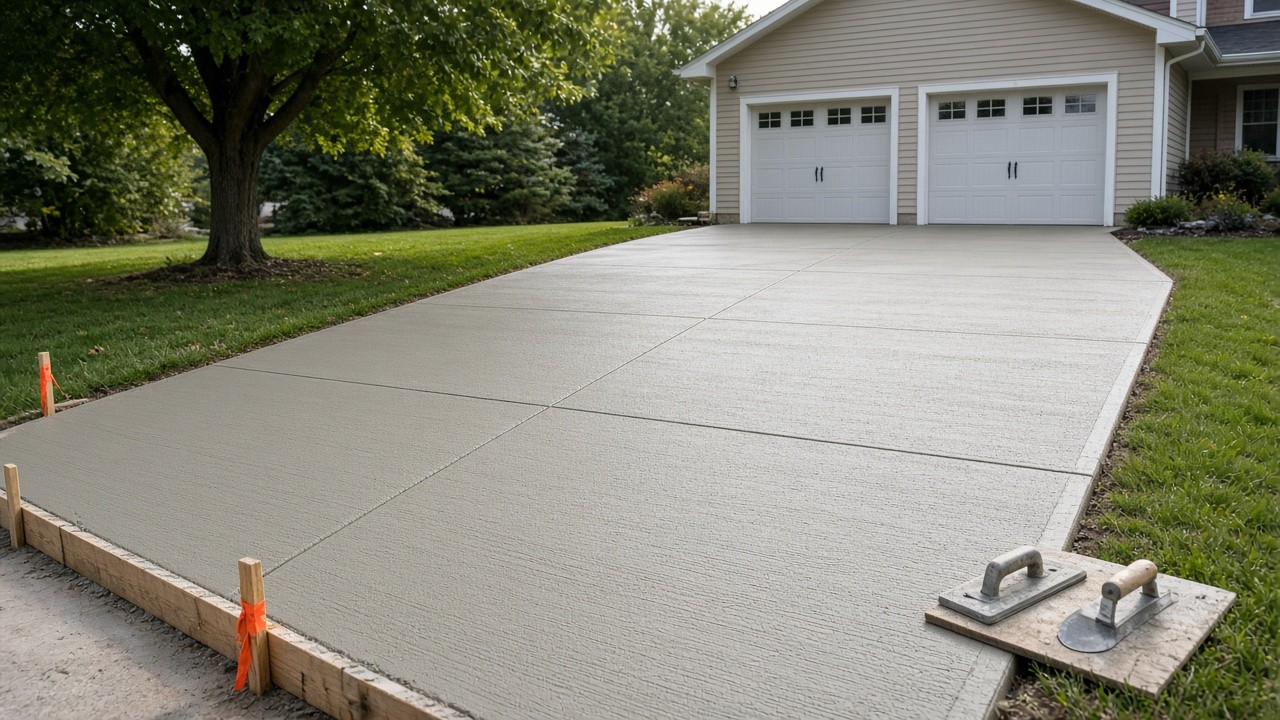
A concrete contractor website should answer what a homeowner, builder, or property manager asks before they call: what kinds of flatwork you pour, which towns you cover, when your season runs and how far out you are booked, whether you handle city permits and sidewalk notices, how long before they can drive on it, what to expect about cracks, and how to get a bid. Put those facts in plain text on pages you own. That is the marketing. Design is the layout that makes those facts easy to find and easy for search and AI to cite.
Concrete in Iowa runs on the weather. The contractors who say plainly when they pour, how they prep, and what the customer should expect after the forms come off get fewer angry calls and more referrals.
Who is reading the site
Flatwork buyers mostly plan ahead, with a few urgent exceptions.
Homeowners replacing a cracked, heaved, or sunken driveway, patio, or walkway. Some want plain broom finish. Some want stamped or colored concrete for a patio. They search and ask AI things like driveway replacement Iowa City, stamped concrete patio Cedar Rapids, or concrete contractor North Liberty.
Homeowners who got a sidewalk repair notice from the city. They have a deadline, they do not know the rules, and they want someone who does. This group is easy to miss and easy to serve with one clear page.
Builders, remodelers, and property managers who need garage floors, basement slabs, footings, parking pads, or repeat repair work. They want capacity, scheduling, and how you handle change orders.
Iowa contractors serving Iowa City, Cedar Rapids, and the Quad Cities compete like flatwork crews all over the Midwest: show clean pours in towns people know, be honest about the calendar, and make the bid request easy.
What the homepage has to say in the first screen
In plain HTML text:
1. Company name and towns you serve 2. Core work: driveways, patios, sidewalks, garage floors, stamped or decorative, tear-out and replacement, leveling — only what you do 3. Phone that reaches someone who books bids 4. One clear button: Request a bid 5. Current season note (for example “booking pours for late spring”) and licensed and insured if you can keep it honest
If a builder or homeowner cannot find those five things fast, they call the next name on the list.
Publish your season and your schedule
Iowa pour season depends on temperature, and your backlog changes week to week. Put both on the site in a short, dated section:
- When you typically start and stop pouring for the year
- How far out you are booking right now
- Whether you do cold-weather pours and what precautions you take
- What happens when rain pushes a pour, and how you tell the customer
- Whether you give bids through the winter for spring work
That last point matters. Many homeowners plan their spring projects in January and February. If your site says you bid all winter, you get those calls.
Explain the job after the pour
Most concrete complaints come from expectations nobody set. A page that covers the first weeks after a pour saves you phone time and earns trust.
Cover, in plain words:
- When they can walk on it, drive a car on it, and park a heavy truck on it
- Why you cut control joints and what they do
- That small hairline cracks can happen and what you consider normal versus a problem
- Whether you seal, when, and whether you recommend resealing later
- Salt and de-icer advice for the first winter
- What your warranty covers and what it does not
This page also gives AI assistants a clear, local answer when someone asks how long new concrete needs to cure before driving on it.
Service pages that match real jobs
- Driveways — tear-out, base prep, thickness, reinforcement you use, finish options
- Patios — plain, stamped, colored, exposed aggregate — only finishes you pour regularly
- Sidewalks and city repair notices — how you handle permits and inspections in the towns you serve, what the homeowner needs to do
- Garage floors and slabs — residential and outbuildings
- Steps, stoops, and walkways
- Concrete leveling or mudjacking — if you lift slabs instead of replacing them, explain when each makes sense
- Commercial flatwork — parking pads, dumpster pads, walks — only if that is real work for you
- Service areas — towns with real pours and photos
The sidewalk notice page is worth special attention. Each city has its own rules and process. Write down what you know from actually doing the work in each town you serve, and point to the city’s own page for the official rules.
Proof that belongs on a URL you own
- Photos of finished pours with town, job type, and finish in the caption
- Base prep and forming photos — they show care before the concrete arrives
- Tear-out before and finished after from the same angle
- Stamped and colored close-ups with pattern and color names
- Reviews on a page you own, with town and job type when allowed
- License, insurance, and any required city contractor registrations
- Warranty terms in plain text
A photo of a finished driveway with the town and square footage named does more than a page of adjectives.
The bid path is the conversion
A good bid request form asks for:
- Name, phone, email
- Address or town
- Driveway, patio, sidewalk, garage floor, steps, leveling, or commercial
- Rough size if they know it
- Tear-out needed, or new pour
- Plain, stamped, or colored
- Photo upload
- City notice or deadline, if any
- Timeline: this season, next spring, flexible
Put it on its own URL so Google Business posts and AI answers can link to it. Say how soon you usually respond to bid requests in the busy months.
Content that feeds search and AI without theater
- When we pour in Iowa, and how early to book for spring
- What to expect in the first 30 days after a new driveway
- Got a sidewalk repair notice? Here is how it works in the towns we serve
- Replace or level? How we decide on a sunken slab
- Short job notes: town, job, size, finish, how the site was prepped
- Stamped patio care through an Iowa winter
Your website stays the source of record. Google Business and Facebook can point back. Your real season, towns, and warranty should live on pages you own.
Bots now make a large share of web requests. People still pour driveways and still check a contractor carefully before a big bill. More and more, machines decide which crews people hear about first. Plain-text services, schedule, towns, and proof on your own domain keep you in that short list.
Design rules that fit the trade
- Fast on mobile. Builders check you from job sites.
- Big, sharp photos of finished work with captions in real text
- High-contrast type
- Navigation: Driveways, Patios, Sidewalks, Leveling, Commercial, Service areas, Reviews, Request a bid
- Click-to-call in the header
- No fake testimonials, invented badges, or “crack-free guarantee” copy you cannot stand behind
- You own the domain, hosting, and content
What Upley does for shops like this
Upley builds and hosts websites for Iowa and Midwest service businesses. For a concrete contractor that means clear pages for each kind of flatwork, a season and backlog note that stays current, a bid path builders and homeowners will actually use, hosting that stays up for daily crawls, and an easy way to post finished pours without turning your crew into marketers.
Same Iowa web team that ran Big Ten Web Design — design, hosting, SEO — plus the modern layer so search and AI can find the true file about your work, towns, and schedule.
If your current site is a phone number and three stock photos of wet concrete, start with the homepage five facts, a season note, and an after-the-pour page. Then build from the bid form.
Book 30 minutes: /half-hour-meeting/ Call 319-535-2508 · aaron@upley.com Iowa City, Cedar Rapids, Quad Cities / Davenport