
A funeral home website should answer what a family asks in a hard week: what to do right now, how to reach someone at any hour, where and when the service is, where to read the obituary and send condolences, what arrangements cost, what cremation involves, and how to plan ahead for themselves. Put those facts in plain text on pages you own. That is the marketing. Design is the layout that makes those facts easy to find on a phone, gently, and easy for search and AI to cite.
A funeral home website serves more than one family at a time. The family making arrangements uses it. So do friends looking for the visitation time, neighbors sending flowers, and relatives three states away watching a livestream. Most of them never call. The website is how the funeral home cares for them.
Who is reading the site
Funeral home traffic comes from a few groups.
Families who just lost someone. They may be calling from a hospital, a care facility, or home. They want to know who to call, what happens next, and that someone will answer. They search and ask AI things like funeral home Iowa City, what to do when someone dies at home Iowa, or cremation Cedar Rapids.
Friends, coworkers, and neighbors. They want the obituary, visitation and service times, directions, and how to send flowers or a memorial gift. Many search the person’s name.
Out-of-town relatives who need directions, lodging nearby, and a livestream link.
People planning ahead. Often older adults, or adult children helping a parent. They want to understand options and costs, calmly, at their own pace.
Clergy, hospice workers, and care facility staff who work with you often.
Iowa funeral homes in Iowa City, Cedar Rapids, the Quad Cities, and small towns across the state serve families the way funeral homes do everywhere: steady, clear, and kind.
What the homepage has to say in the first screen
In plain HTML text:
1. Funeral home name, town, and street address for each location 2. A phone number answered at any hour, stated plainly 3. Recent obituaries, one click away 4. Clear links: If a death has occurred / Plan ahead / Obituaries 5. Office hours
A person who just lost a parent should find the phone number and a short “what to do now” page without scrolling.
Keep obituaries on your own pages
For many people in a town, the funeral home’s obituary page is where they learn who has passed and when to pay respects.
- One page per obituary, on your own domain
- Full name, town, dates, and the obituary text written with the family
- Visitation and service times, places, and addresses, in plain text
- Directions and parking notes for each place
- Livestream link and replay details, if the family wants one
- Memorial gift information as the family chooses
- A condolence area, moderated
- Flower ordering, if you offer it, with clear notes on delivery timing
Families often also post an obituary with a newspaper or a memorial site. That is fine. The full, correct version, with service times, should live on your own site. When times change, change them in one place. Search engines and AI assistants look for the person’s name, the town, and the service time. Your page should be the one they find.
Always follow the family’s wishes on what to publish, and remove or edit pages when they ask.
What to do when a death occurs
Write this page slowly and plainly.
- Who to call first when a death happens at home, in a hospital, or in a care facility, in general terms
- What happens when you receive the call
- What the family should bring or gather for the arrangement meeting
- How long arrangements usually take
- A reminder that the family can ask questions at any time
Share prices clearly
Price is hard to talk about in a hard week. Being clear is a kindness.
The FTC Funeral Rule is a federal rule that covers how funeral homes share prices. In general terms, it requires a funeral home to give a written general price list to people who ask about arrangements in person, and to give price information over the phone when asked. It also gives families the right to choose only the goods and services they want, with some exceptions the rule describes, and to use a casket or urn bought somewhere else without being charged a handling fee for it. Read the current rule and FTC guidance yourself, and confirm your practices with your state association or counsel.
On the website:
- Say plainly that families can ask for your general price list, and how to get it
- Consider posting your general price list or price ranges online. Many funeral homes do, and families appreciate it. Check current requirements, since rules on online price posting have been under review.
- Explain packages in plain words, with what each includes
- Explain cremation options and costs in general terms
- Explain what third-party costs usually involve: cemetery, obituary notices, clergy honoraria, certified death certificates
Pre-planning, at the reader’s pace
- What pre-planning means: writing down wishes, with or without paying ahead
- How pre-funded arrangements work in general terms, and that state rules govern them
- A planning guide people can fill out at home
- How to start a planning conversation, with no pressure
Keep this page calm. People reading it are thinking about their own death or a parent’s. A gentle, plain page earns more trust than any offer.
Service pages that match how families search
- Traditional funeral services
- Cremation services: with and without a service, memorial gatherings
- Graveside and memorial services
- Veterans’ services: honors and benefits in general terms
- Religious and cultural traditions: the traditions you serve regularly
- Pre-planning
- Grief support: local groups and resources
- Locations: one page per chapel, with address, parking, and photos
Proof that belongs on a URL you own
- A staff page with names, roles, and licensed funeral directors noted accurately
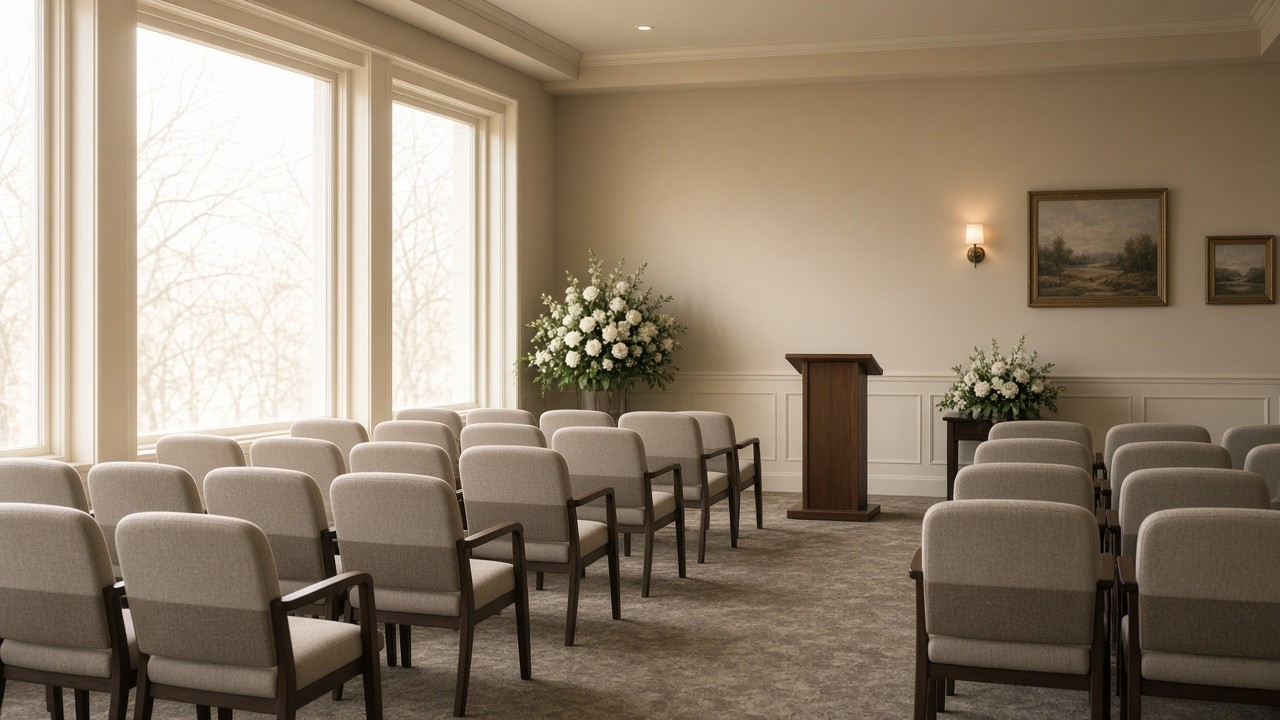
- Photos of your actual chapels, gathering rooms, and grounds
- Family reviews on a page you own, with their permission, plus a link to Google Business
- The history of the funeral home, told plainly
- Accessibility and parking facts for each location
The call is the conversion
For a death that just happened, the phone call is everything. Put the number, and the words “answered at any hour” if true, at the top of every page.
For pre-planning, a short form helps:
- Name, phone, email
- Planning for self or someone else
- Burial, cremation, or not sure
- Preferred way to talk: in person, phone, or by mail
Say how fast you reply. Put the planning form on its own URL so Google Business posts and AI answers can link to it.
Content that feeds search and AI without theater
Useful posts for a funeral home read like plain, gentle guidance:
- What to do in the first hours after a death at home
- How to write an obituary, with a simple outline
- Cremation questions families ask us most
- How to ask for our general price list
- Veterans’ burial benefits, in general terms
- Grief resources in Johnson County
Why the website matters more now
Websites and SEO are changing. They still matter, and for funeral homes they matter more now. Bots now make a large share of web requests. People still search a name to find service times, and families still choose a funeral home with care. More and more, ChatGPT, Gemini, Grok, and Google’s AI answers shape what people see when they look up a name or ask about arrangements. Those tools look for clear facts: names, dates, times, places, prices.
Your website should be the source of record. Newspapers, memorial sites, and social pages can point back to it. Keep the true obituaries, service times, and price information on a domain you own.
Design rules that fit a funeral home
- Fast on mobile, calm colors, large readable type
- Phone number at the top of every page
- Obituaries easy to search by name
- Navigation: Obituaries, If a death has occurred, Plan ahead, Services, Pricing, Locations, Contact
- No pop-ups, pushy offers, or fake reviews
- You own the domain, hosting, and content
What Upley does for funeral homes like this
Upley builds and hosts websites for Iowa and Midwest businesses. For a funeral home that means obituary pages on your own domain, a clear “if a death has occurred” page, a gentle pre-planning page, clear price information, hosting that stays up when a well-known person’s service draws a crowd of visitors, and an easy way for staff to post obituaries and update service times.
Same Iowa web team that ran Big Ten Web Design, handling design, hosting, and SEO, plus the modern layer so search and AI can find the true file about your funeral home, services, and obituaries.
If your obituaries live mostly on a third-party site, start with the homepage five facts, obituary pages on your own domain, and a “what to do now” page. Then add pricing and pre-planning.
Book 30 minutes: /half-hour-meeting/ Call 319-535-2508 · aaron@upley.com Iowa City, Cedar Rapids, Quad Cities / Davenport