
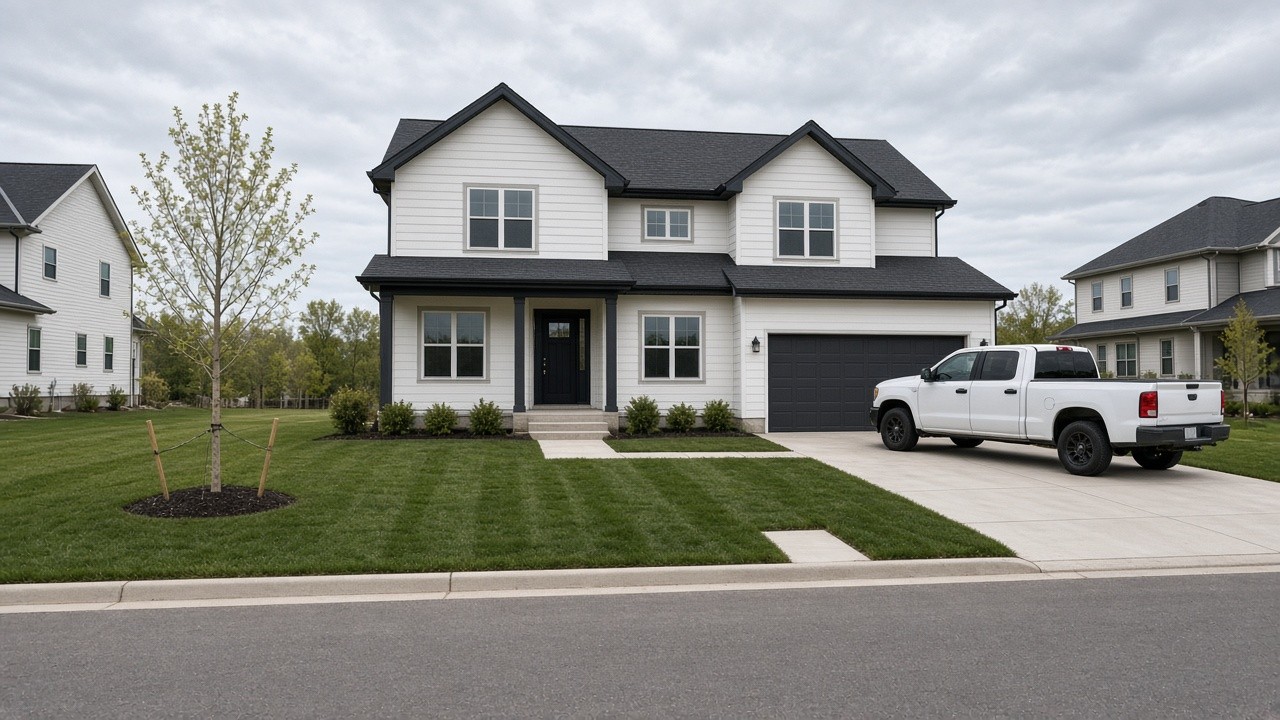
A home builder or general remodeler website should answer what a family asks during the long stretch before they sign: whether you build on their land or only on your lots, what kinds of homes and additions you take on, how allowances and change orders work, how a construction loan pays you in draws, who handles permits and inspections, how long a build or addition usually runs, what the warranty covers and when the walk-throughs happen, and how to start. Put those facts in plain text on pages you own. That is the marketing. Design is the layout that makes those facts easy to read and easy for search and AI to cite.
People decide on a new house or a big addition over months, sometimes years. They read everything. The builder whose site answers the money and paperwork questions honestly gets the first call.
Who is reading the site
Builder and remodeler traffic comes from a few groups, and most of them are early in the process.
Families who own land, or are about to buy it, and want a custom home. Many are rural and want to know if you build outside town and work with their bank. They search and ask AI things like custom home builder Solon, build on your own lot Johnson County, or who builds homes near Mount Vernon.
Buyers looking at new construction in your subdivisions. They want lots, plans, standard features, and timing.
Homeowners planning a major addition, a whole-house remodel, or a basement finish. They want to know if you take projects their size and pull the permits.
Realtors and lenders check your site before they recommend you. They want license and insurance facts and recent homes.
Iowa builders around Iowa City, Cedar Rapids, and the Quad Cities compete the same way builders all over the Midwest do: show finished homes in real towns, explain the process and the money plainly, and make the first meeting easy to book.
What the homepage has to say in the first screen
In plain HTML text:
1. Company name and the towns and counties you build in 2. Core work: custom homes, build on your lot, spec homes, additions, whole-house remodels — only what you actually take on 3. Phone that reaches the owner or someone who can talk about a project 4. One clear button: Start a project / Book a first meeting 5. Current booking note (for example, how far out you are scheduling new starts), and licensed and insured if you can keep it honest
If a family lands from Google Maps, a realtor’s link, or an AI answer and cannot find those five things quickly, they move on.
Explain allowances and change orders before anyone asks
Two words cause a lot of trouble between builders and clients: allowance and change order. Many builder sites never mention either. That is a missed chance to earn trust early.
Write a plain page that covers:
- What an allowance is, which items in your bids usually carry one (cabinets, flooring, lighting, plumbing fixtures), and what happens when a selection comes in over or under
- How the selection calendar works: when each choice is due, where clients go to pick, and what happens to the schedule when a choice is late
- What a change order is, how you price one, whether you charge a fee to process it, and when changes stop being possible without delay
Keep the language calm and describe your process. A family that reads this page before the first meeting shows up with better questions and fewer surprises later. AI assistants asked how allowances work with an Iowa builder also get a clear local source.
Say how the money moves
Many new homes and large additions are paid through a construction loan. Clients often do not know how that works until the bank explains it in a hurry.
Say what you can honestly say:
- Whether you work with construction loans, and whether you have lenders you often see on your jobs (name them only with their permission)
- How draws work on your projects: roughly which stages trigger a draw request and who inspects before the bank releases funds
- What deposit or earnest money you ask for at contract, described as a process, with the amount set in the contract
- How lot purchase, well, septic, and utility hookups fit into the budget for build-on-your-lot homes
You do not need to publish prices. The goal is that a family understands how money moves before they sit down with you and their lender.
Give build-on-your-lot its own page
Rural families ask different questions. Say which counties you build in, what you need first (survey, perc test, county permits, driveway access), whether you coordinate the well driller, septic installer, and power company, and how distance affects schedule. Show a few homes on acreage with the county named. This page reaches rural searches your subdivision pages miss.
Service pages that match real jobs
- Custom homes — your process from first meeting to move-in, plan sources, typical size range you build
- Build on your lot — counties, site prep, well and septic coordination
- Homes in our communities — lots, plans, standard features, what counts as an upgrade
- Additions — bedrooms, garages, sunrooms, second stories — only work you take
- Whole-house and major remodels — what size project you start at, how you handle occupied homes
- Basement finishes — egress, permits, moisture checks
- Warranty — what is covered, for how long, and when the walk-throughs happen
- Service areas — towns and counties with real homes and photos
Separate pages with photos give search and AI something specific to cite.
Proof that belongs on a URL you own
- A home page for each finished project: town or subdivision, size, style, a few photos, and what was special about the build
- Framing and mechanical photos along with finished rooms, so people can see work that gets covered up
- Reviews on a page you own, with town and project type when allowed, plus a link to Google Business
- License, registration, and insurance facts, and how to verify them
- Warranty terms in plain text: what the builder covers, what manufacturer warranties cover, when the 60-day or one-year walk-through happens if you schedule one
Renderings are fine for plans you offer. Finished homes with a town name prove you build.
The first-meeting path is the conversion
A good start-a-project form asks for:
- Name, phone, email
- Where the project is: own lot, one of your lots, or existing home (town or county)
- New home, addition, major remodel, or basement
- Do they own the land yet, and do they have a survey or plans
- Rough timeline: this year, next year, just starting to look
- Have they talked to a lender yet
- Budget range if they want to share one
Put the form on its own URL so realtors, Google Business posts, and AI answers can link to it. Keep click-to-call in the header on mobile. Say how fast you reply and who will call.
Content that feeds search and AI without theater
- How allowances work on our homes, with a real example of a selection that came in over
- Building on acreage in Johnson County: what to line up before we start
- How construction loan draws work on our builds
- What the one-year warranty walk-through covers, and what counts as normal settling
Your website stays the source of record for customers and for AI assistants like ChatGPT, Gemini, and Grok. Realtors, lenders, Facebook, and Google Business can all point to it. Keep your true service area, process, and warranty facts on a page you own.
Bots now make a large share of web requests. People still build homes, pick builders carefully, and read your site before they call. Search is changing, and more and more, machines decide which builders a family hears about first. Plain-text process, money flow, towns, and finished homes on a domain you own keep you in that short list.
Design rules that fit the trade
- Fast on mobile. People look at your homes on a phone at the kitchen table.
- Large photos with captions in real text, and high-contrast type
- Navigation: Custom homes, Build on your lot, Communities, Remodels, Our process, Warranty, Reviews, Start a project
- Click-to-call in the header
- No fake testimonials or award badges you did not win
- You own the domain, hosting accounts, and content if you change agencies
Pretty is fine once the facts are readable. A slideshow of kitchens with no town, no process, and no warranty page loses the family who wanted details.
What Upley does for shops like this
Upley builds and hosts websites for Iowa and Midwest service businesses. For a home builder or general remodeler that means clear pages for how you build, how the money and paperwork work, which towns and counties you cover, and what the warranty includes, plus hosting that stays up for daily crawls and a simple way to post build updates from the job site without turning your crew into marketers.
Same Iowa web team that ran Big Ten Web Design — design, hosting, SEO — plus the modern layer so search and AI can find the true file about your homes, process, and service area.
If your current site is a logo, a slideshow, and a contact box, start with the homepage five facts, an allowances and change orders page, and three finished homes with towns named. Then build from the first-meeting form.
Book 30 minutes: /half-hour-meeting/ Call 319-535-2508 · aaron@upley.com Iowa City, Cedar Rapids, Quad Cities / Davenport