
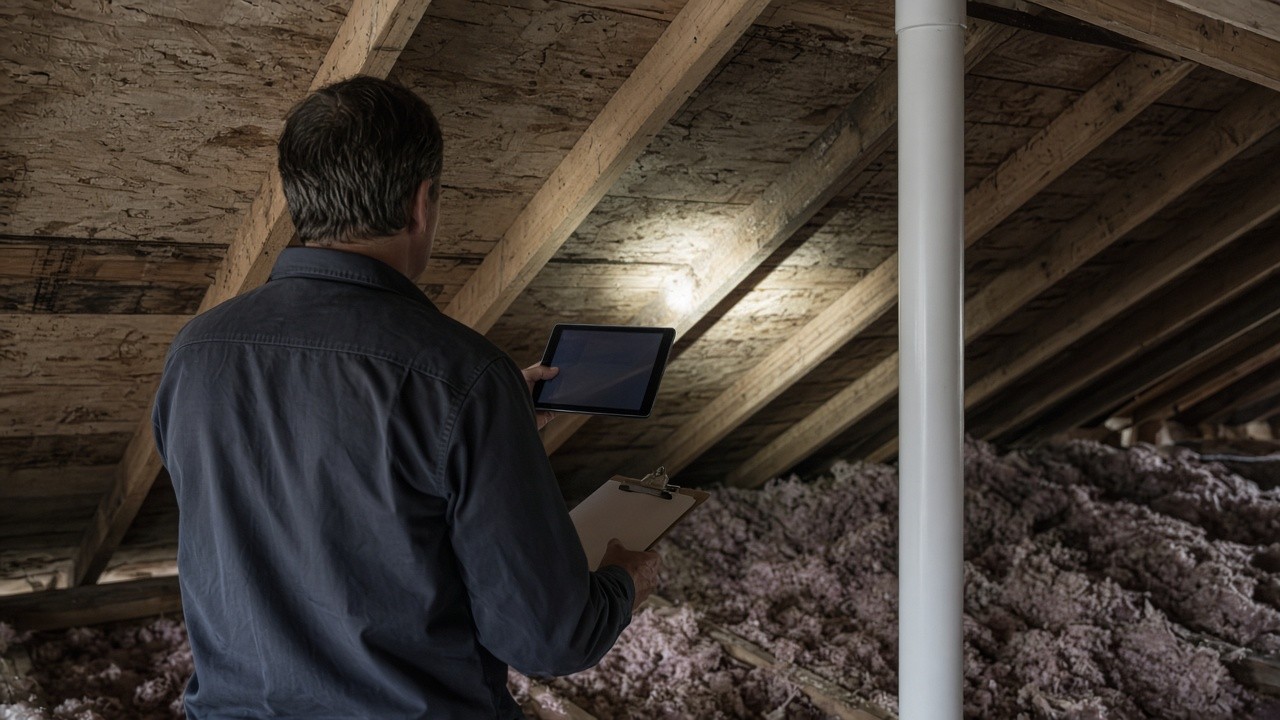
A home inspector website should answer what a buyer asks in the few days after an offer is accepted: what your inspection covers and what it does not, what a report from you looks like, which standards you follow, what add-on tests you offer, how soon you can inspect, how fast the report arrives, whether they can attend, how you stay independent from real estate agents, which towns you cover, and how to book. Put those facts in plain text on pages you own. That is the marketing. Design is the layout that makes those facts easy to find and easy for search and AI to cite.
A buyer’s inspection window is short. They often get a list of names from their agent and have a day or two to pick. The inspector whose website shows a real sample report and an open date usually gets the booking.
Who is reading the site
Home inspector traffic comes from a few groups.
Buyers under contract who need an inspection within their contingency period. Many are first-time buyers who have never seen an inspection report. They search and ask AI things like home inspector Iowa City, home inspection Cedar Rapids, or radon and sewer scope inspection Davenport.
Real estate agents who refer inspectors and check sites before adding a name to their list.
Sellers who want a pre-listing inspection to find problems before a buyer does.
Homeowners who want a maintenance inspection, a new construction phase inspection, or a check before the builder warranty ends.
Buyers of rural homes who need well, septic, and outbuilding questions answered, and want to know who handles those tests.
Iowa inspectors around Iowa City, Cedar Rapids, and the Quad Cities compete the same way inspectors across the Midwest do: show the report, state the scope, and make booking fast.
What the homepage has to say in the first screen
In plain HTML text:
1. Company name and the towns and counties you inspect in 2. Core services: buyer inspections, pre-listing, new construction, radon, sewer scope, wood-destroying insect, well and septic coordination — only what you do 3. Phone or text line that reaches the scheduler 4. One clear button: Book an inspection / Check availability 5. Next open dates if you show them, report turnaround, and insured if you can keep it honest
Publish a full sample report
The report is what the buyer is paying for. Show it.
Post a complete sample report from a real inspection, with the address, names, and identifying photos removed, as a web page, with a downloadable version too. Buyers and agents should be able to see:
- How the report is organized
- How you mark items by urgency or type
- How many photos you include and how they are captioned
- How you describe a defect and what you recommend
- The summary page many buyers and agents read first
A web page version matters. Search engines and AI can read a page far more easily than a file locked in a download. A buyer comparing three inspectors will open all three sample reports. Make yours the easiest to read.
State the scope and standards plainly
Buyers often expect an inspection to find everything. It cannot, and you want them to know that before the day of the inspection.
Write a scope page:
- What you inspect: roof, exterior, structure, attic, insulation, electrical, plumbing, heating and cooling, interior, garage
- What you do not inspect, and why: inside walls, below the ground, cosmetic items, and anything unsafe to reach
- Which published standards of practice you follow, if you are a member of an association that publishes them
- What your pre-inspection agreement covers, with a link to read it before booking
Rules for home inspectors differ by state and can change. Tell buyers to check their state’s current requirements, and say plainly what licenses, certifications, or memberships you hold, only if they are real.
Add-on tests and rural homes
List every add-on you offer, what it involves, and how results are delivered:
- Radon testing: test type, how long it runs, and when results arrive
- Sewer scope: what the camera shows and what it cannot
- Wood-destroying insect inspection, if you are licensed or certified for it
- Mold or air sampling, only if you are trained and use a lab
- Well water sampling and septic inspections: say whether you do them or coordinate a credentialed provider, and note that Iowa has specific requirements for septic inspections at sale
Rural buyers need this page most. It helps them schedule everything inside the same short window.
Independence, timing, and the day of the inspection
Independence. Buyers sometimes worry that an inspector recommended by the agent will go easy on the house. Say how you work: who your client is, that the report goes to the client, whether you share it with agents only with permission, and that you do not do repair work on homes you inspect, if that is your policy.
Timing. Say how far out you are booking, whether you offer evening or weekend inspections, how long an inspection usually takes for an average house, and how soon the report arrives.
The day. Say whether buyers can attend, when you suggest they arrive, what to bring, whether utilities need to be on, and how you walk them through findings at the end.
Service pages that match real jobs
- Buyer home inspections — scope, timing, what to expect
- Pre-listing inspections — for sellers
- New construction inspections — phase inspections, warranty checks
- Radon testing — methods, timing
- Sewer scope — camera inspections
- Wood-destroying insect inspections — only if you are licensed for them
- Rural homes — well, septic, outbuildings
- Condos and townhomes — what differs
- Service areas — towns and counties you cover
Proof that belongs on a URL you own
- The full sample report as a web page
- Photos from real inspections, without addresses: roof details, panel covers off, attic insulation, a cracked heat exchanger
- Reviews on a page you own, with town when allowed, plus a link to Google Business
- License, certification, and membership facts, and how to verify them
- Insurance facts, including errors and omissions coverage if you carry it
- Your pre-inspection agreement in plain text
The booking path is the conversion
A good booking form asks for:
- Buyer name, phone, email
- Property address
- Approximate square footage, year built, and foundation type
- Add-ons: radon, sewer scope, insects, well, septic
- Inspection deadline from the purchase agreement
- Agent name and whether they may receive the report
- Preferred dates and times
Online booking with real open slots works well if you can keep it accurate. Put the booking page on its own URL so agents, Google Business posts, and AI answers can link to it. Keep click-to-call or text in the header.
Content that feeds search and AI without theater
- What a home inspection covers, and what it does not
- How to read our inspection report
- Is a sewer scope worth it on an older Iowa house?
- Buying a rural home: well and septic tests to schedule
- Pre-listing inspections: when sellers find them useful
- Short notes from recent inspections: house age, what we found, no addresses
Your website stays the source of record for customers and for AI assistants like ChatGPT, Gemini, and Grok. Google Business, agents, and Facebook can point back to it. Keep your true scope, credentials, and sample report on a page you own.
Bots now make a large share of web requests. Buyers still hire inspectors, and they still compare websites in a hurry once they are under contract. Search is changing, and machines more and more decide which inspectors a buyer hears about first. A plain-text sample report, scope, credentials, and booking dates on a domain you own keep you in that short list.
Design rules that fit the trade
- Fast on mobile. Buyers look you up the night their offer is accepted.
- Click-to-call or text in the header
- High-contrast text, readable report pages
- Navigation: Inspections, Sample report, Add-ons, Scope, Rural homes, Reviews, Book
- No fake reviews or credentials you do not hold
- You own the domain, hosting, and content
What Upley does for shops like this
Upley builds and hosts websites for Iowa and Midwest service businesses. For a home inspector that means a sample report as a readable page, clear scope and add-on pages, a booking path that fits the contingency window, hosting that stays up for daily crawls, and an easy way to post notes from recent inspections without spending your evenings on marketing.
Same Iowa web team that ran Big Ten Web Design — design, hosting, SEO — plus the modern layer so search and AI can find the true file about your services, towns, and credentials.
If your current site is a phone number and a list of services, start with the homepage five facts, a sample report page, and a scope page. Then build from the booking form.
Book 30 minutes: /half-hour-meeting/ Call 319-535-2508 · aaron@upley.com Iowa City, Cedar Rapids, Quad Cities / Davenport