
An industrial 3D printing website should answer the RFQ questions an engineer asks before they upload a file: what processes you run (metal, polymer, or both), what materials and powder lots you support, what build envelopes you hold, how you post-process and inspect, and how fast you quote. Put those facts in plain text on pages you own. That is the marketing. Design is the layout that makes those facts easy to find on a phone and easy for search and AI to cite.
Stock hero shots of glowing lasers and the word “innovation” do not win the quote. Capability pages do.
Who is reading the site
Most serious additive traffic is not a hobbyist. It is a manufacturing engineer, a design engineer trying to cut lead time, or a procurement lead comparing a printed option to machined or cast. They already have a geometry, a material callout, and a deadline. They are checking whether your shop can build that part without a long discovery call.
They search and ask AI things like metal powder bed fusion for Inconel, DMLS aluminum brackets, SLS nylon fixtures, binder jet for short runs, or heat treatment and HIP after print. Your website has to match that language with real numbers from your floor — not agency adjectives.
Iowa and Midwest shops near Cedar Rapids, Waterloo, and the Quad Cities compete the same way additive shops everywhere do: prove the process envelope, then make the quote path short.
What the homepage has to say in the first screen
In plain HTML text, not locked in a logo:
1. Shop name and city (or cities) 2. Core processes: metal PBF, polymer SLS/FDM, binder jet, directed energy deposition — only what you actually run 3. Phone and email that reach a human who quotes 4. One clear button: Request a quote / Upload a file 5. One line on quote turnaround or typical lead time if you can keep it honest
If someone lands from Google, LinkedIn, or an AI answer and cannot find those five things in ten seconds, the rest of the brand story does not matter.
Build capability pages, not a keyword dump
One URL should equal one clear capability. Examples that work for shops of different sizes:
- Metal additive — machine class, build volume, materials (Ti-6Al-4V, Inconel 718, 316L, AlSi10Mg), density and surface notes you will stand behind
- Polymer additive — SLS, MJF, FDM industrial; materials you stock; when you recommend print vs machine
- Post-processing — support removal, heat treat, HIP, machining, bead blast, dye, coating
- Inspection — CT, CMM, first article, powder lot traceability when you offer it
- Industries — aerospace, medical, industrial fixtures, ag tooling — only where you have real work
- File formats and NDA — STEP/STL/3MF, PDF drawings, and how you handle confidential models
A thin “Services” page that lists every buzzword is worse than three honest pages. Search and AI cite specific files. Buyers save specific pages for the RFQ folder.
Small Midwest shops can start with one strong capabilities page that includes machines, materials, and post-processing — then split pages as content grows. Shops with metal and polymer lines should give each family its own URL. Buyers search those terms on purpose.
Equipment and process lists beat vague “state of the art”
Publish the floor the way a buyer audits a supplier:
- Machine type and process
- Build envelope
- Materials qualified on that machine
- Any specialty (in-house heat treat, machining cells, powder handling)
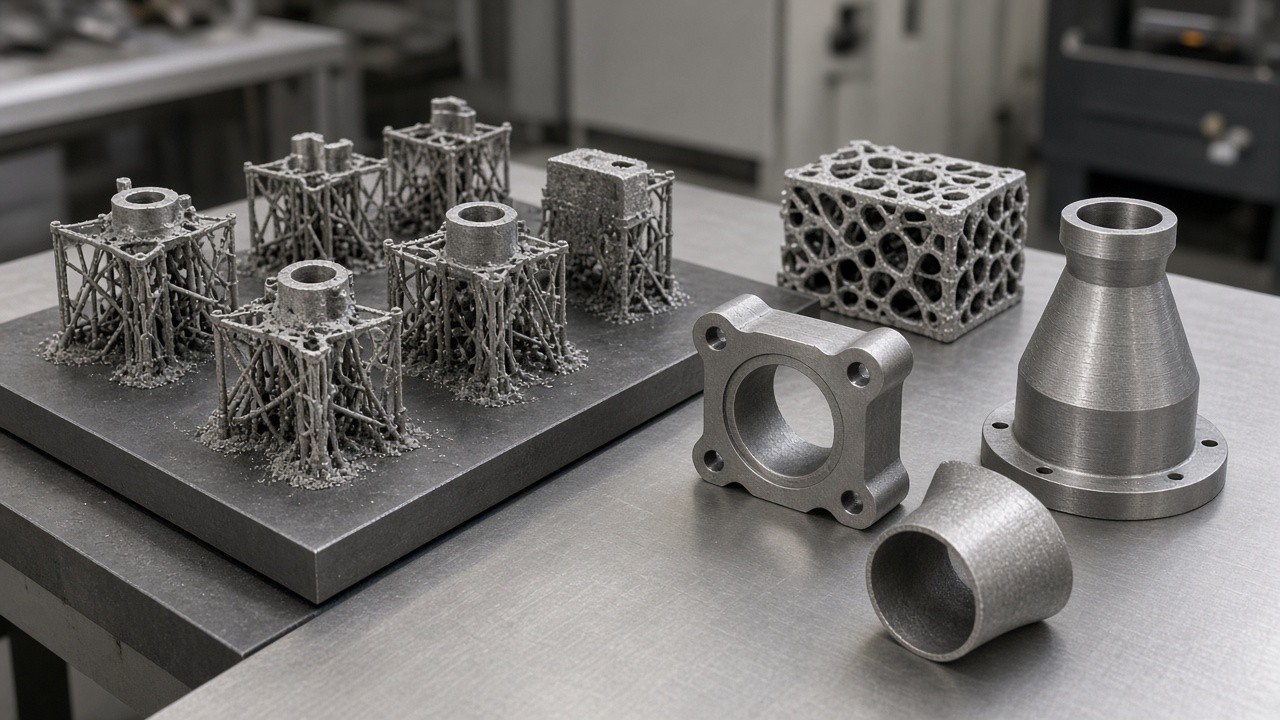
Photos of real parts on a build plate or inspection table help. Stock “futuristic factory” images hurt trust. You do not need a laser-show video on day one. You do need numbers.
The RFQ path is the conversion
Marketing for an additive shop is not a newsletter signup first. It is a quote.
A good RFQ page or form asks for:
- Company and corporate email
- Process needed (metal PBF, SLS, FDM, etc.)
- Material and quantity
- Application notes (prototype, production, fixture)
- Secure upload for STEP/STL/3MF and 2D drawings
- Optional NDA before file review
- Stated quote response window you can keep
If the only CTA is “Contact us” with a blank message box, engineers bounce and send the file to the shop whose form already matches their checklist.
Content that feeds search and AI without theater
Useful posts and pages for an additive shop look like work notes, not slogans:
- When to print vs machine a bracket
- What to send with an RFQ so the quote is accurate
- How you handle powder lot traceability and first-article reports
- Material notes you actually know (316L vs Inconel for a given duty)
- Short job write-ups: material, process, post-processing, industry — no customer secrets
Your website stays the source of record. Directory listings, LinkedIn, and Google Business can point back to these pages. Do not bury the only true machine list inside a PDF brochure that crawlers and chat tools skip.
Bots already do a large share of web requests. People still buy parts. Machines increasingly decide which shop they mention first. Plain-text capabilities on a domain you own are how you stay in that short list.
Design rules that fit a shop floor brand
- Fast on mobile. Buyers open links between meetings.
- High-contrast text. No pale gray on gray.
- Navigation: Capabilities, Equipment, Materials, Quality / Inspection, RFQ, About, Contact
- Phone click-to-call in the header
- No fake testimonials or invented aerospace logos
- You own the domain, hosting accounts, and content when the agency relationship ends
Pretty is fine after the facts are readable. Pretty instead of facts is a stalled quote queue.
What Upley does for shops like this
Upley builds and hosts websites for Iowa and Midwest service and manufacturing businesses. For an industrial 3D printing shop that means clear capability pages, an RFQ path that matches how engineers actually buy, hosting that stays up for daily crawls, and a way to publish real build-plate and inspection photos without turning your techs into marketers.
Same Iowa web team that ran Big Ten Web Design — design, hosting, SEO — plus the modern layer so search and AI can find the true file about your machines and materials.
If you run metal, polymer, or a mix, and your current site still says “additive solutions” with no envelope numbers, start with the homepage five facts and one honest capabilities page. Then grow from the RFQ.
Book 30 minutes: /half-hour-meeting/ Call 319-535-2508 · aaron@upley.com Iowa City, Cedar Rapids, Quad Cities / Davenport