
An insulation contractor website should answer what a homeowner, builder, or farm owner asks before they call: which materials you install and where, whether you air seal first, what an assessment includes, how you show what you did once it is covered up, whether you help with utility rebate paperwork, which towns you cover, and how to book. Put those facts in plain text on pages you own. That is the marketing. Design is the layout that makes those facts easy to find and easy for search and AI to cite.
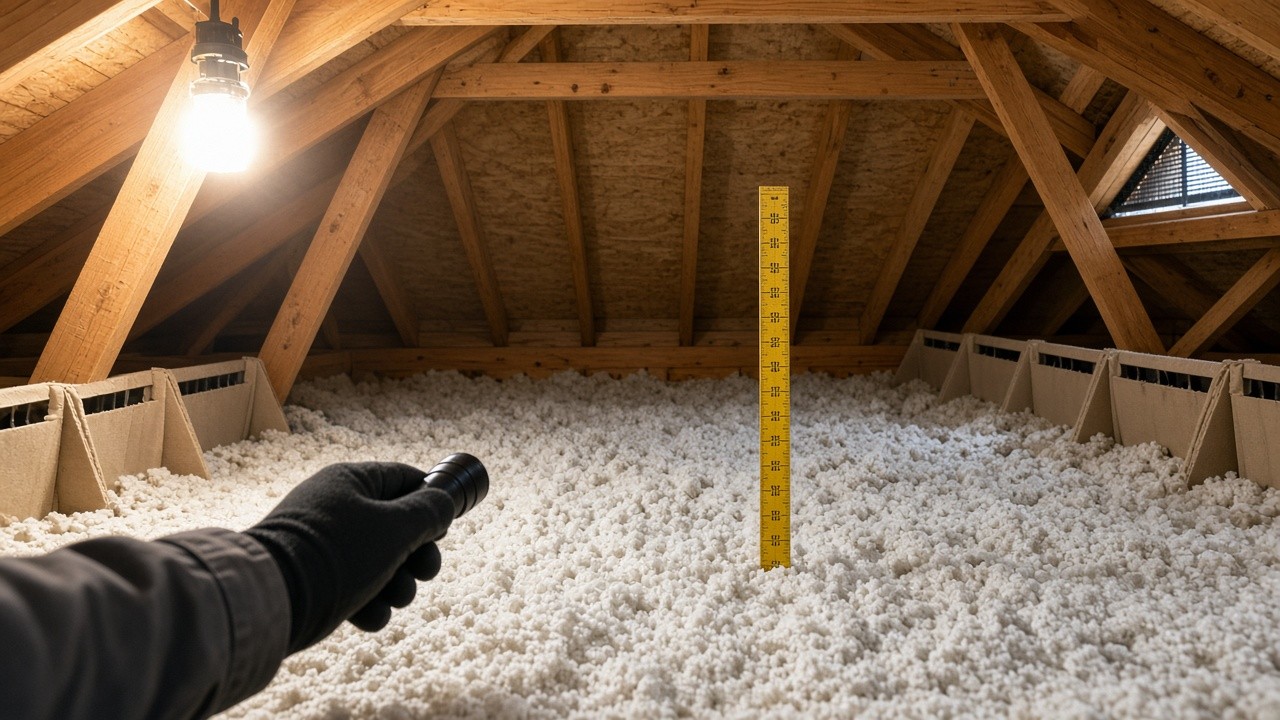
Insulation has a problem most trades do not. The finished work is hidden in an attic, a wall, or a crawlspace. Nobody drives by and admires it. Your website has to make that invisible work visible.
Who is reading the site
Homeowners with cold rooms, high heating bills, ice dams, drafty older houses, or an attic they have never looked at. Often they start with a vague sense that something is wrong. They search and ask AI things like attic insulation Iowa City, blown-in insulation Cedar Rapids, spray foam contractor Davenport, or why is my upstairs so cold.
Builders and remodelers who need new-construction insulation, spray foam in additions, or code-compliant work that passes inspection on schedule.
Owners of pole barns, shops, and ag buildings who want to heat a space for winter work. This is a big market in Iowa, and many insulation sites barely mention it.
Iowa contractors serving Iowa City, Cedar Rapids, and the Quad Cities compete like insulation companies all over the Midwest: explain the problem clearly, prove what you did behind the drywall, and make the assessment easy to book.
What the homepage has to say in the first screen
In plain HTML text:
1. Company name and towns you serve 2. Core work: attic insulation, air sealing, spray foam, wall insulation, crawlspaces, pole barns and shops, new construction — only what you do 3. Phone that reaches someone who books assessments 4. One clear button: Book an assessment / Request a quote 5. Hours, and licensed and insured if you can keep it honest
Make the hidden work visible
This is the core of an insulation website. Show what the customer cannot easily see:
- Attic photos before: thin, uneven, or matted insulation, gaps around lights and chases, bare spots
- Depth ruler photos before and after
- Air sealing close-ups: top plates, plumbing and wire penetrations, attic hatch
- Baffles at the eaves to keep vents clear
- Thermal camera images, if you use one, labeled plainly with what they show
- Finished photos with the material, depth, or R-value target named in the caption
Caption every photo with town, house age, and what you did. A homeowner who sees an attic like theirs, from a house like theirs, in a town they know, understands the problem in a way no paragraph can match. And those captions are what search and AI read.
Explain materials without a sales pitch
Homeowners hear conflicting claims about insulation types. A plain comparison page earns trust:
- Blown-in cellulose and fiberglass — where each fits, how you install it
- Spray foam, open and closed cell — where you use each, and where you do not recommend it
- Batts — where they still make sense
- Rigid foam — basements, rim joists, exterior applications
- Air sealing — why you do it before adding insulation, if that is your practice
Only list materials you actually install. Say what you recommend for common Iowa situations, like an older story-and-a-half with cold upstairs bedrooms or a 1990s ranch with a thin attic layer. Keep it honest and specific to your experience.
Rebates and paperwork
Utility and government rebate programs change over time, and homeowners find them confusing. If you help with them, that is a strong reason to hire you. Say it on the site:
- Which utility programs you participate in, if any, with a link to the utility’s own page for current terms
- Whether you handle the paperwork or the homeowner files it
- What documentation you provide: photos, before and after measurements, invoices with the details programs usually ask for
- A date on the page, and a note that program terms can change
Do not quote rebate amounts unless you keep them current. Point people to the program source for the latest numbers.
Service pages that match real jobs
- Attic insulation and air sealing
- Spray foam insulation — residential, additions, rim joists
- Wall insulation for existing homes — dense-pack or other methods you use, and how you patch
- Basement and crawlspace insulation
- Pole barns, shops, and ag buildings — spray foam or other systems you install, condensation notes
- New construction — for builders, with inspection and scheduling notes
- Insulation removal — old, damaged, or pest-contaminated material, if you do it
- Service areas — towns with real jobs and photos
The pole barn and shop page is worth doing well. Include photos of real buildings, the systems you used, and a plain explanation of how insulation affects condensation on metal roofs.
Proof that belongs on a URL you own
- Before and after attic and wall photos with captions
- Depth measurements and material notes
- Reviews on a page you own, with town and job type when allowed. Comments about warmer rooms and fewer ice dams are the most useful kind.
- License and insurance facts
- Manufacturer certifications you actually hold, especially for spray foam
- Warranty terms in plain text
The assessment path is the conversion
A good assessment request form asks for:
- Name, phone, email
- Address or town
- House, addition, new build, pole barn, or shop
- House age if they know it
- What they notice: cold rooms, high bills, ice dams, drafts, pests in the attic
- Photo of the attic hatch view if they can safely take one
- Timeline
- Whether they are interested in rebate programs
Put it on its own URL. Keep click-to-call on mobile. Say what the assessment includes and whether it is free.
Content that feeds search and AI without theater
- What we look for in an Iowa attic, with photos
- Why we air seal before we add insulation
- Insulating a pole barn: what works and what causes condensation problems
- Ice dams: how insulation and ventilation affect them
- Short job notes: town, house age, what we found, what we did, depth before and after
- Rebate programs we work with, updated with a date
Your website stays the source of record. Google Business and Facebook can point back. The true description of your process and your proof photos should live on pages you own.
Bots now make a large share of web requests. People still insulate their homes and still want to know what they paid for once the attic hatch closes. More and more, machines decide which contractors people hear about first. Plain-text process, photos with captions, and towns on your own domain keep you in that short list.
Design rules that fit the trade
- Fast on mobile
- Photos large enough to see detail, with text captions
- High-contrast type
- Navigation: Attics, Spray foam, Walls, Pole barns and shops, Rebates, Service areas, Reviews, Book an assessment
- Click-to-call in the header
- No invented savings percentages, fake testimonials, or badges you do not hold
- You own the domain, hosting, and content
What Upley does for shops like this
Upley builds and hosts websites for Iowa and Midwest service businesses. For an insulation contractor that means clear pages for each kind of work, a photo system that turns attic and wall shots into captioned proof, an assessment path that fits how homeowners and builders buy, hosting that stays up for daily crawls, and an easy way to post jobs without turning your crew into marketers.
Same Iowa web team that ran Big Ten Web Design — design, hosting, SEO — plus the modern layer so search and AI can find the true file about your work, process, and towns.
If your current site has a stock photo of pink batts and a contact box, start with the homepage five facts and ten captioned before-and-after attic photos. Then build from the assessment form.
Book 30 minutes: /half-hour-meeting/ Call 319-535-2508 · aaron@upley.com Iowa City, Cedar Rapids, Quad Cities / Davenport