
A radon mitigation website should answer what a homeowner, buyer, or seller asks before they call: whether their test result means they need a system, whether your mitigators hold the state credential, how a system works, where the pipe and fan will go on their house, how long the install takes, how loud the fan is and what it costs to run, how the follow-up test works, how fast you can install before a closing, which towns you serve, and how to book. Put those facts in plain text on pages you own. That is the marketing. Design is the layout that makes those facts easy to find and easy for search and AI to cite.
Radon is invisible, and many people only think about it when a test result lands in their inbox, often in the middle of buying or selling a house. They want a calm, clear answer and a company they can trust with their basement.
Who is reading the site
Radon traffic comes from a few groups.
Home buyers and sellers with a test result from a home inspection. They are on a closing timeline and need a quote and an install date fast. Their real estate agents are often on the call too. They search and ask AI things like radon mitigation Iowa City, radon system install before closing Cedar Rapids, or radon fan replacement Davenport.
Homeowners who tested on their own, maybe after reading about radon or getting a test kit from a health department. They want to understand the result and their options without being scared.
Homeowners with an existing system: a fan that stopped, a gauge that looks wrong, or a system installed years ago that they want checked.
Builders and buyers of new homes who want radon-resistant construction or a system roughed in.
Iowa companies around Iowa City, Cedar Rapids, and the Quad Cities compete the same way radon companies across the Midwest do: show the credential, explain the system calmly, and meet the closing date.
What the homepage has to say in the first screen
In plain HTML text:
1. Company name and the towns you serve 2. Core work: radon mitigation systems, radon testing, fan replacement, system checks, new construction — only what you do 3. Phone that reaches someone who books 4. One clear button: Get a mitigation quote / Book a test 5. State credential line if you can keep it honest, and how far out you are installing
Put credentials and rules front and center
In Iowa, people who test for radon or install mitigation systems for a fee generally need a credential from the state. Rules and program names can change, so point people to the state’s radon program page for the current requirements and a way to verify a credential.
On your site:
- Name the credentialed people on your team and their credential numbers, if they agree
- Link to the state lookup so customers and agents can verify
- Say which testing and mitigation standards you follow, if you follow a published standard
- Say whether you do testing, mitigation, or both, and how you handle a potential conflict of interest if you do both
Agents and careful buyers check this first. A page with names and numbers answers the question before they ask.
Explain testing and the follow-up test
Customers are often confused about what their number means and what comes next. Explain plainly and point to official sources for health guidance:
- What kinds of tests you use or accept: short-term, long-term, continuous monitors
- What the federal action level is, with a link to the EPA page, and that the state health agency has guidance too
- Why a follow-up test after installation matters, when you do it, and who does it
- How the homeowner can retest in future years
Stay calm and stick to official guidance. Do not make health claims beyond what the agencies say. A clear page helps people who are worried, and it gives AI assistants a sensible local answer when someone asks what to do about a high radon test in Iowa.
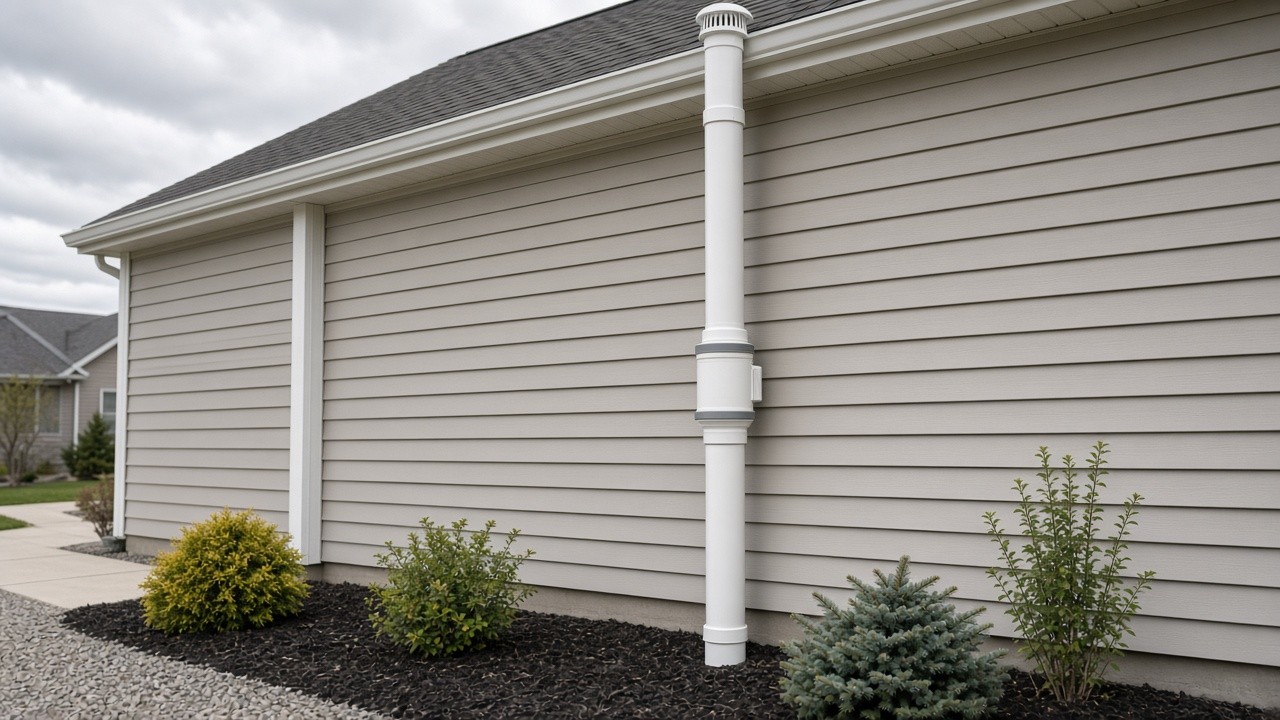
Show what the system looks like on the house
Homeowners want to know what they are getting. Many picture something ugly on the front of the house.
Write a page with photos of real installs showing:
- Where the pipe usually runs: outside along a side wall, through the garage, or up through the house, and how you decide
- Where the fan goes and why it is usually outside the living space
- What the gauge inside looks like and how to read it
- How you seal cracks and sump covers as part of the job
- How you finish the pipe: color matching, routing along corners, downspout-style options
Then answer the common questions: how loud the fan is, roughly how much electricity it uses described in plain terms, how long fans usually last, and what happens when one fails. Say what your warranty covers.
Real estate timing and new construction
Real estate timing. Buyers and sellers need a quote, a date, and a follow-up test before closing. Say how fast you usually quote from a test report, how far out you are installing, whether you can coordinate with both agents, and what paperwork you provide at the end. Who pays is up to the purchase agreement, so leave that to the agents.
New construction. Say whether you work with builders on radon-resistant construction, pipe rough-ins, and activating a passive system later. Note that some local codes address this and builders should check their local rules.
Service pages that match real jobs
- Radon mitigation systems — how they work, install process, photos
- Radon testing — test types, timing, results
- Real estate radon — closing timelines, agent coordination, paperwork
- Fan replacement and system checks — older systems, failed fans, gauges
- New construction — rough-ins, passive to active systems
- Crawl spaces and slab homes — only if you handle them
- Service areas — towns with real installs
Proof that belongs on a URL you own
- Photos of real installs with town and house type in the caption, including exterior pipe routing
- Before and after test results, with customer permission and no addresses
- Reviews on a page you own, with town and job when allowed, plus a link to Google Business
- State credential names and numbers, and how to verify
- Insurance facts
- Warranty terms in plain text for the fan, the system, and your workmanship, including what happens if the follow-up test is still high
The quote path is the conversion
A good quote form asks for:
- Name, phone, email
- Address or town
- Homeowner, buyer, seller, or agent
- Test result, with an upload of the report
- Basement, slab, crawl space, or a mix
- Is there a sump pit
- Closing date, if any
- Photos of the basement and the side of the house where a pipe might go
Put the form on its own URL so agents, Google Business posts, and AI answers can link to it. Keep click-to-call in the header.
Content that feeds search and AI without theater
- What to do after a high radon test during a home purchase
- What a radon system looks like on an Iowa house
- How loud is a radon fan?
- Why we retest after every install
- How to check your radon gauge
- Short job notes: town, house type, where we ran the pipe
Your website stays the source of record for customers and for AI assistants like ChatGPT, Gemini, and Grok. Google Business, Facebook, and agent referrals can point back to it. Keep your true credentials, process, and towns on a page you own.
Bots now make a large share of web requests. People still hire radon companies, and buyers, sellers, and agents still check credentials on a website before they call. Search is changing, and machines more and more decide which companies they hear about first. Plain-text credentials, process, photos, and timing on a domain you own keep you in that short list.
Design rules that fit the trade
- Fast on mobile. Agents and buyers look you up between showings.
- Click-to-call in the header
- High-contrast text and real photos with captions
- Navigation: Mitigation, Testing, Real estate, System checks, Credentials, Reviews, Get a quote
- No scare copy, fake reviews, or credentials you do not hold
- You own the domain, hosting, and content
What Upley does for shops like this
Upley builds and hosts websites for Iowa and Midwest service businesses. For a radon mitigation company that means a credentials page, clear testing and system pages, a real estate page agents can send clients to, a quote form that takes test reports from a phone, hosting that stays up for daily crawls, and an easy way to post installs without turning your crew into marketers.
Same Iowa web team that ran Big Ten Web Design — design, hosting, SEO — plus the modern layer so search and AI can find the true file about your services, towns, and credentials.
If your current site is one page with a radon warning and a phone number, start with the homepage five facts, a credentials page, and a page of real installs. Then build from the quote form.
Book 30 minutes: /half-hour-meeting/ Call 319-535-2508 · aaron@upley.com Iowa City, Cedar Rapids, Quad Cities / Davenport