
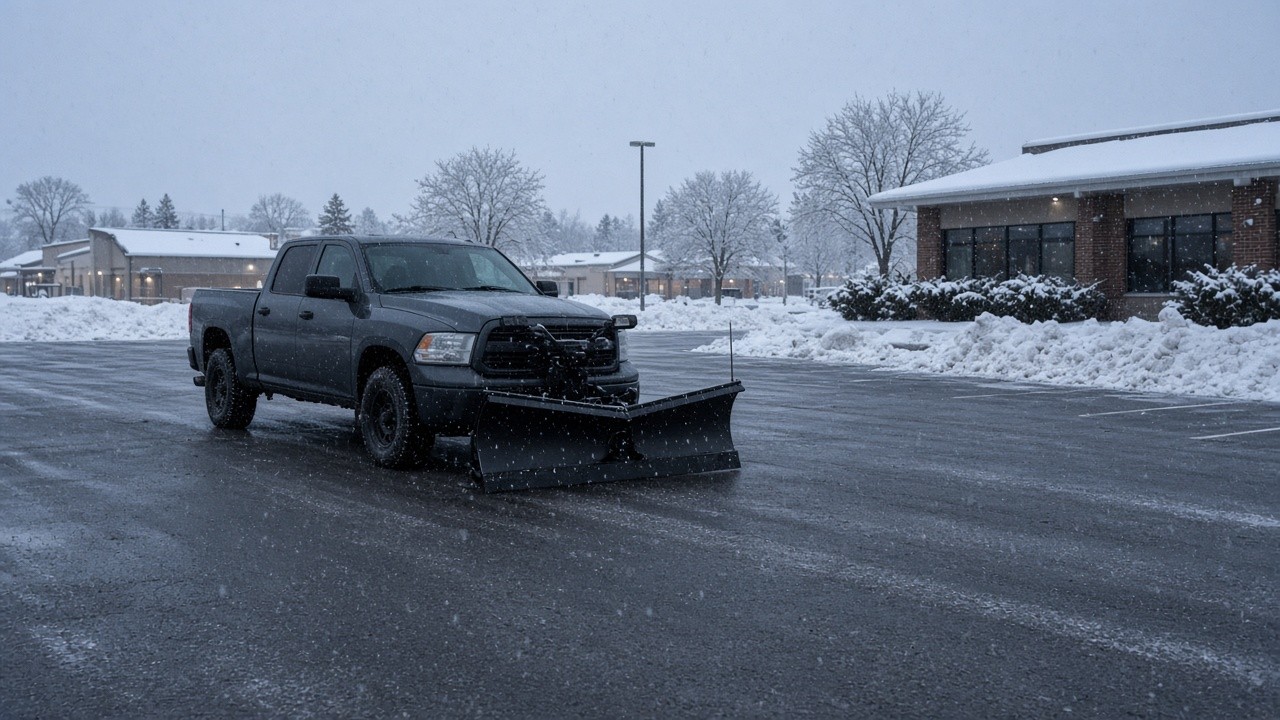
A snow removal website should answer what a homeowner or property manager asks before they sign up: which towns and neighborhoods you plow, how much snow has to fall before you come out, how soon after a storm you arrive, where they fall in the route, whether you do sidewalks, steps, and salting, how pricing works, what happens if your plow damages the lawn or a mailbox, when sign-up closes, and how to reach you during a storm. Put those facts in plain text on pages you own. That is the marketing. Design is the layout that makes those facts easy to find and easy for search and AI to cite.
Snow removal is sold in the fall and delivered in the dark at 4 a.m. Many customers decide before the first flake. The company whose terms are clear on the website in October is the one people sign with.
Who is reading the site
Snow removal traffic comes from a few groups, and the calendar drives all of them.
Homeowners who want their driveway and sidewalk cleared before work. Many are older, have health reasons to avoid shoveling, or leave early for work. They search and ask AI things like snow removal Iowa City, driveway plowing North Liberty, or residential snow service Bettendorf.
Property managers, HOAs, churches, clinics, and small businesses who need lots, walks, and entrances clear before opening. They care about response time, liability, documentation, and insurance.
Homeowners searching during or right after a storm because the snow is already there. They want to know if you take one-time jobs.
Iowa companies around Iowa City, Cedar Rapids, and the Quad Cities compete the same way snow contractors across the Midwest do: publish clear terms, be reachable during storms, and show up when you said you would.
What the homepage has to say in the first screen
In plain HTML text:
1. Company name and the towns you plow 2. Core work: residential driveways, commercial lots, sidewalks, salting and ice control, snow hauling — only what you do 3. Phone or text line that works during storms 4. Two clear buttons: Sign up for this season / Commercial quote 5. Current sign-up status (for example, “residential routes open until November 15” or “commercial routes full in Coralville”), and insured if you can keep it honest
Update item five every season. It is the first thing returning customers look for.
Publish the contract terms before the first snow
Many snow disputes come from terms that were never written down. Put yours on a page:
- Trigger depth. How many inches before you come out. Whether you plow once at the end of a storm or during long storms too.
- Timing and route order. Roughly when you start, and how you order the route. Commercial before residential? Medical and early-opening businesses first? Say it plainly so a homeowner knows why they are later than the clinic.
- Sidewalks and steps. Included or extra. Shovel or snow blower. Front walk only or to the back door.
- Salt and ice control. Included, extra, or per application. What product you use, and whether you use a pet-friendly or concrete-friendly option on request.
- Drifting and plow-backs. Do you come back when the city plow fills the end of the driveway?
- Damage. What you do about lawn edges, mailboxes, landscape lights, and pavers. Whether you mark driveways with stakes in the fall and who sets them.
- Cancellation and light winters. What happens in a season with little snow, if you sell seasonal contracts.
You do not need to publish prices. Clear terms show people you run an organized service, and they give AI assistants a clear answer when someone asks how snow removal contracts work.
Explain the pricing models you offer
Customers compare companies that price in different ways and get confused. Describe the models you use and who each one fits:
- Seasonal contract — one price for the season within set limits
- Per push or per visit — billed each time you come out
- Per event — billed by storm, with a note on how you define one
- One-time service — for storm-day callers, if you take them
Say how you bill and when. You can describe the models without listing numbers.
Sidewalk rules and commercial documentation
Many Iowa cities require property owners to clear public sidewalks within a set time after a snowfall. The rules differ by town. Tell customers that, link to the ordinance for each town you serve, and say whether your service covers the public sidewalk.
For commercial customers, explain what documentation you keep: time stamps for each visit, photos, salt applications, and whether you share logs on request. Property managers and insurance carriers care a lot about this. Say what insurance you carry and that certificates are available.
Service pages that match real jobs
- Residential snow removal — driveways, walks, terms, route towns
- Commercial snow removal — lots, walks, entrances, documentation
- Salting and ice control — products, application rules
- Sidewalk service — public walks and city rules
- Snow hauling and stacking — for lots that run out of room, if you do it
- One-time and storm-day service — if you take those calls
- Service areas — towns and neighborhoods on your routes
Proof that belongs on a URL you own
- Photos of cleared lots and driveways with town in the caption, including early-morning shots
- Photos of your trucks and equipment
- Reviews on a page you own, with town and service when allowed, plus a link to Google Business
- Insurance facts, with certificates for commercial clients
- Your written terms, dated for the current season
The sign-up path is the conversion
A good residential sign-up form asks for:
- Name, phone, email
- Address
- Driveway size and shape, with a photo
- Sidewalks and steps: yes or no, which ones
- Salt: yes or no
- Anything to avoid: pavers, landscape lights, a steep slope
- Seasonal, per push, or not sure
A good commercial form asks for:
- Business name and contact
- Property address, lot size, and number of entrances
- Opening time and any early-access needs
- Sidewalks, salt, and hauling needs
- Documentation needs
Put each form on its own URL so Google Business posts and AI answers can link to the right one. Keep click-to-call or text in the header.
Content that feeds search and AI without theater
- How our snow routes work, and why some driveways come first
- What “two-inch trigger” means on our contracts
- Iowa City sidewalk snow rules: what homeowners need to know
- Salt, sand, or treated product: what we use and why
- How to mark your driveway before the first snow
- Short route notes after a storm: towns, how long the route took
Your website stays the source of record for customers and for AI assistants like ChatGPT, Gemini, and Grok. Google Business, Facebook, and Nextdoor can point back to it. Keep your true route towns, terms, and sign-up dates on a page you own.
Bots now make a large share of web requests. People still sign up for snow service, and they still read terms before they commit to a winter. Search is changing, and machines more and more decide which companies a homeowner or manager hears about first. Plain-text terms, routes, sign-up dates, and real photos on a domain you own keep you in that short list.
Design rules that fit the trade
- Fast on mobile. People check you from bed at 5 a.m. to see if you are coming.
- Click-to-call or text in the header
- A storm status note near the top during winter if you keep one updated
- High-contrast text and real photos with captions
- Navigation: Residential, Commercial, Terms, Service areas, Reviews, Sign up
- No fake reviews or badges
- You own the domain, hosting, and content
What Upley does for shops like this
Upley builds and hosts websites for Iowa and Midwest service businesses. For a snow removal company that means clear residential and commercial pages, written terms that stay current each season, sign-up forms that work from a phone, hosting that stays up during storm-night traffic and daily crawls, and an easy way to post route updates without turning your drivers into marketers.
Same Iowa web team that ran Big Ten Web Design — design, hosting, SEO — plus the modern layer so search and AI can find the true file about your services, routes, and terms.
If your current site is a plow photo and a phone number, start with the homepage five facts, a terms page, and a sign-up form. Do it before the first storm.
Book 30 minutes: /half-hour-meeting/ Call 319-535-2508 · aaron@upley.com Iowa City, Cedar Rapids, Quad Cities / Davenport